Scaling with Mastercard

Channel GTM & Sales Enablement
Taking a fintech product to market through a three-tier distribution channel

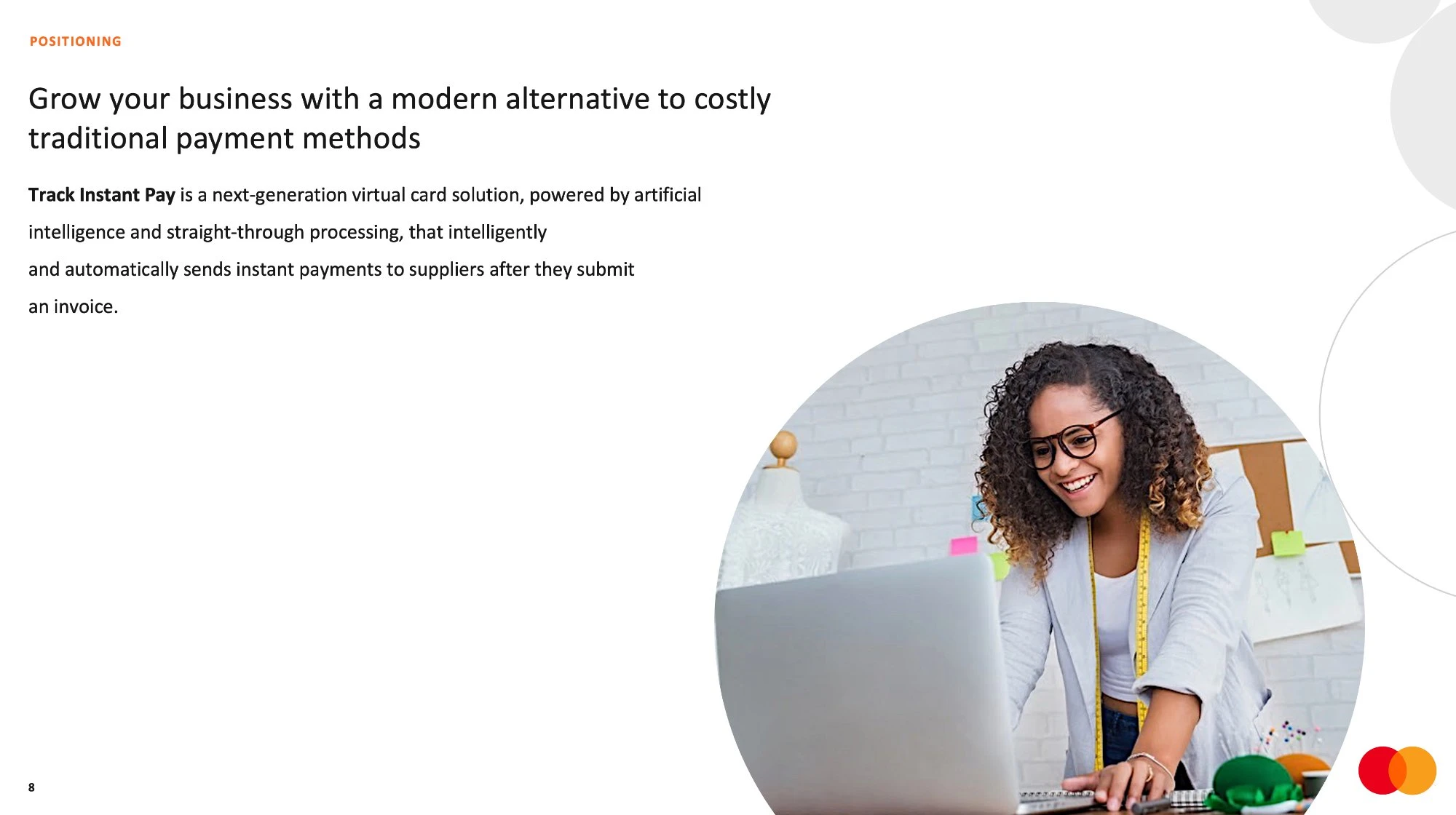
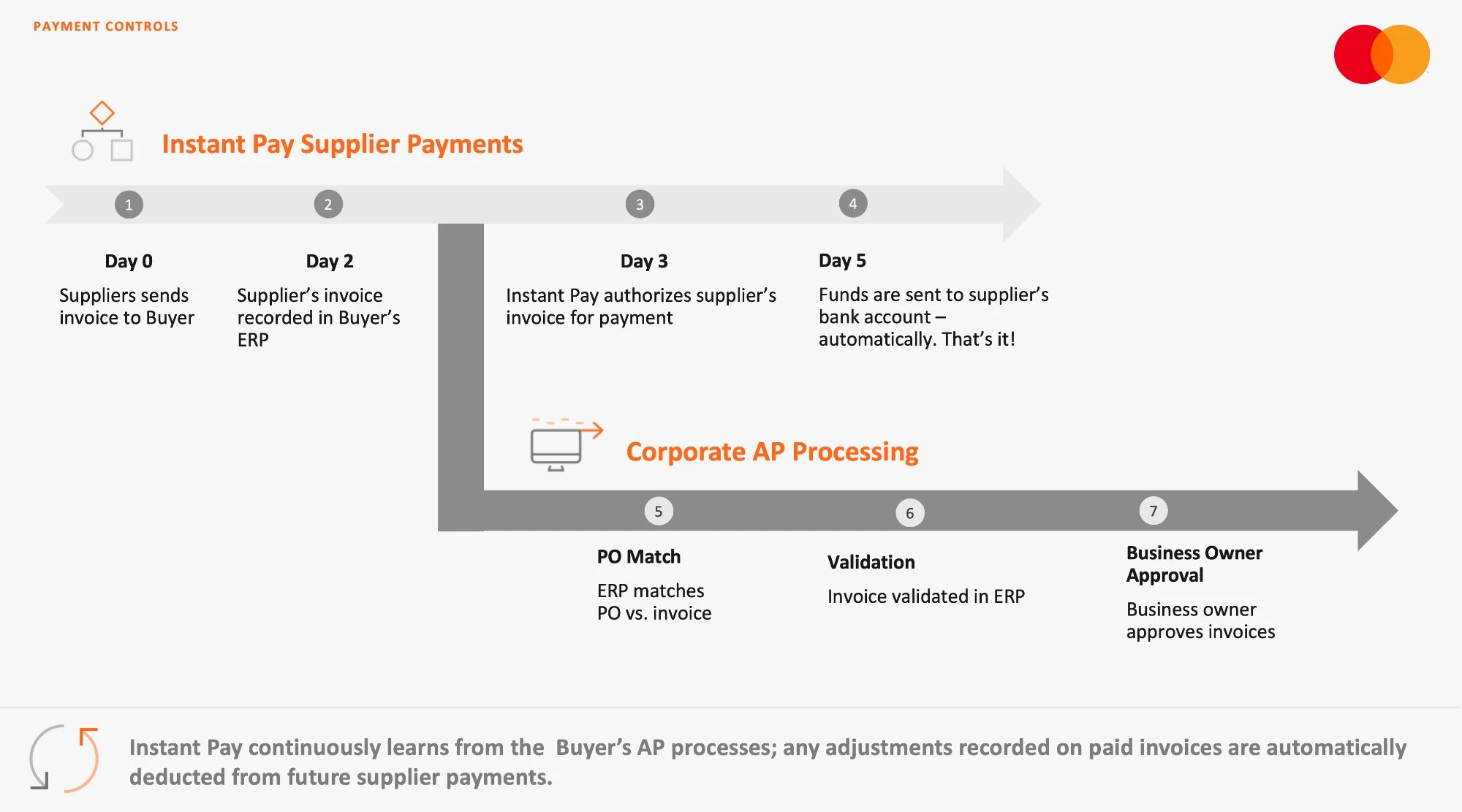
InstantPay had proven the model with enterprise buyers. The next challenge was a different order of magnitude: translating that proposition onto card payment rails and taking it to market across North America through Mastercard’s distribution network, their banking partners, and ultimately the enterprise clients those banks served. Three tiers of channel, three distinct sales enablement challenges, each requiring its own proposition, content suite and activation approach.

Results

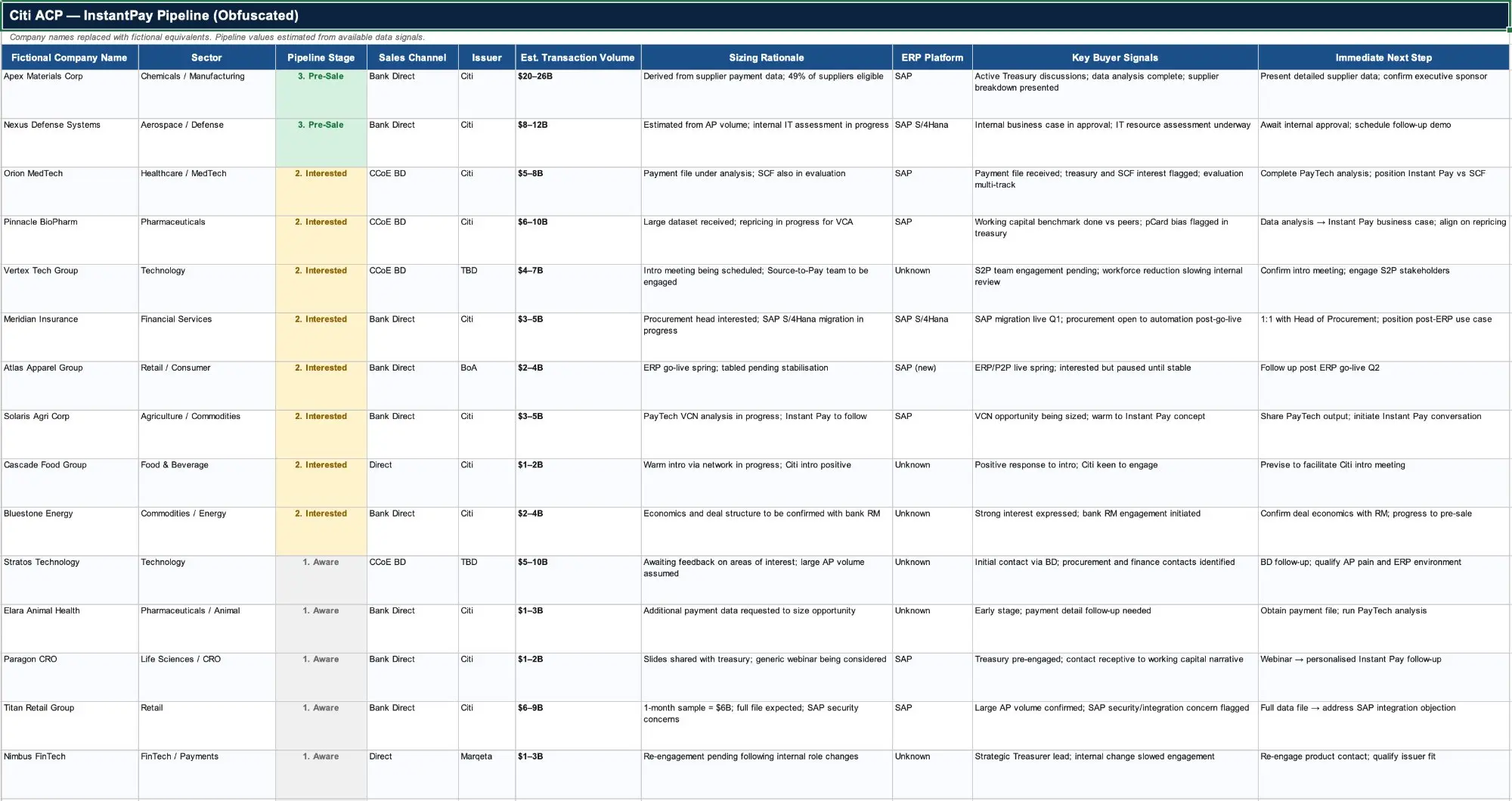
  • $20B addressable transaction pipeline generated within three months of banking client rollout
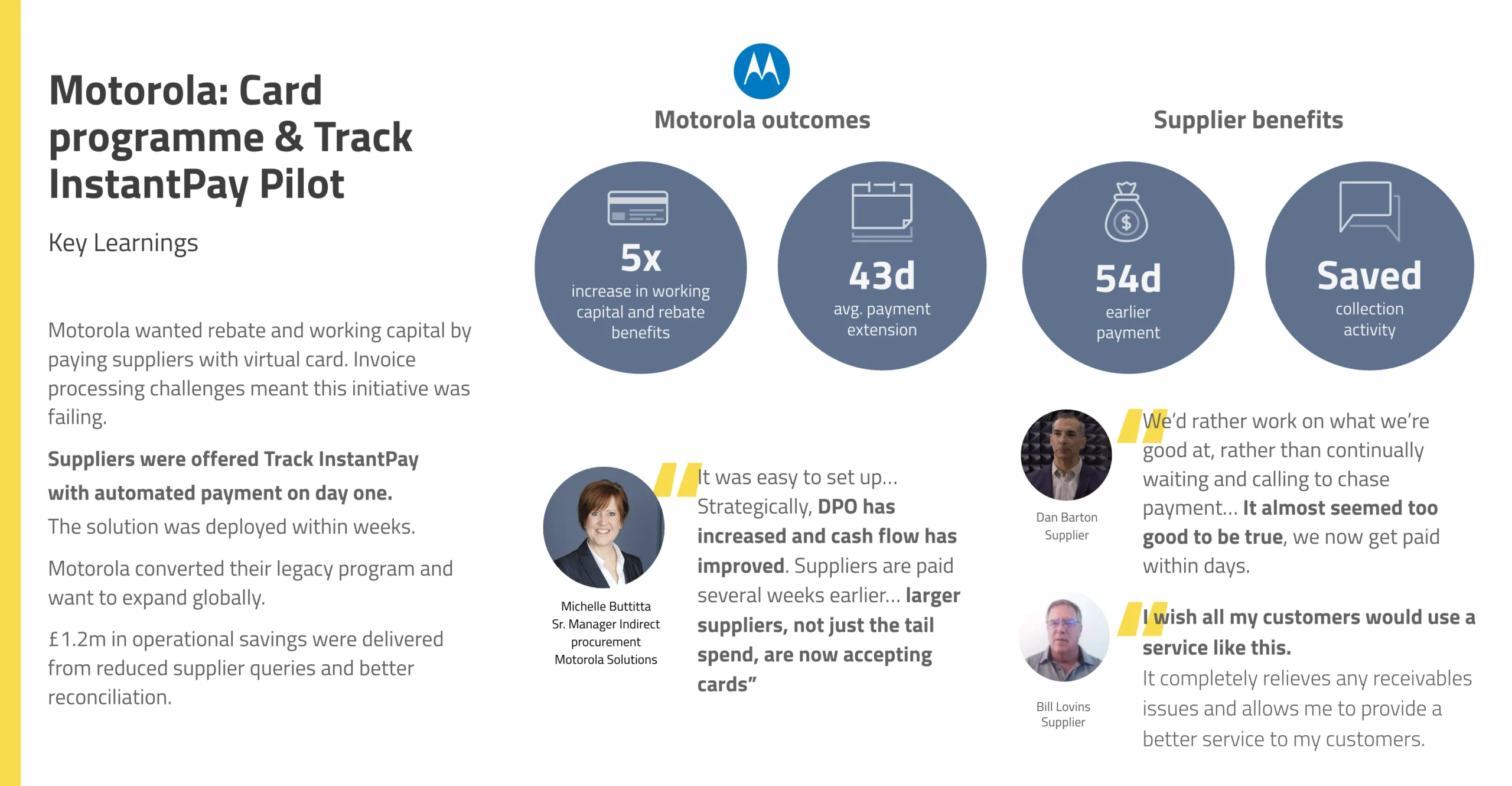
  • 5x card volume uplift achieved through the Motorola pilot case study
  • Citibank and HSBC activated as first banking partners across North America

Lay the groundwork before activating the channel

Before a single sales conversation could happen, three things needed to be in place: a clear picture of who the right enterprise client was, a thorough understanding of how the Mastercard distribution team operated, and a live pilot that could prove the model with real results.

1

Define the ICP and find the pathfinder

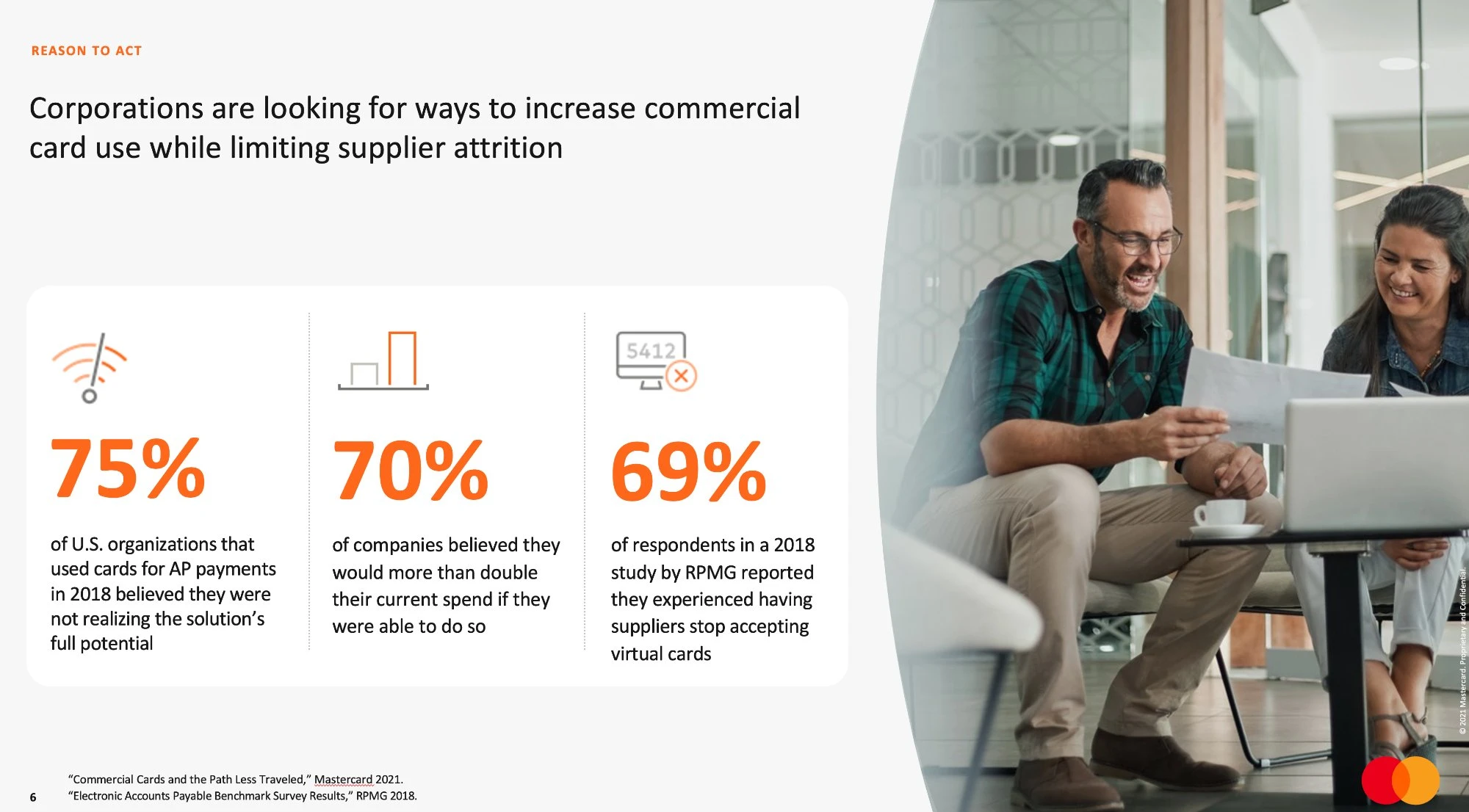
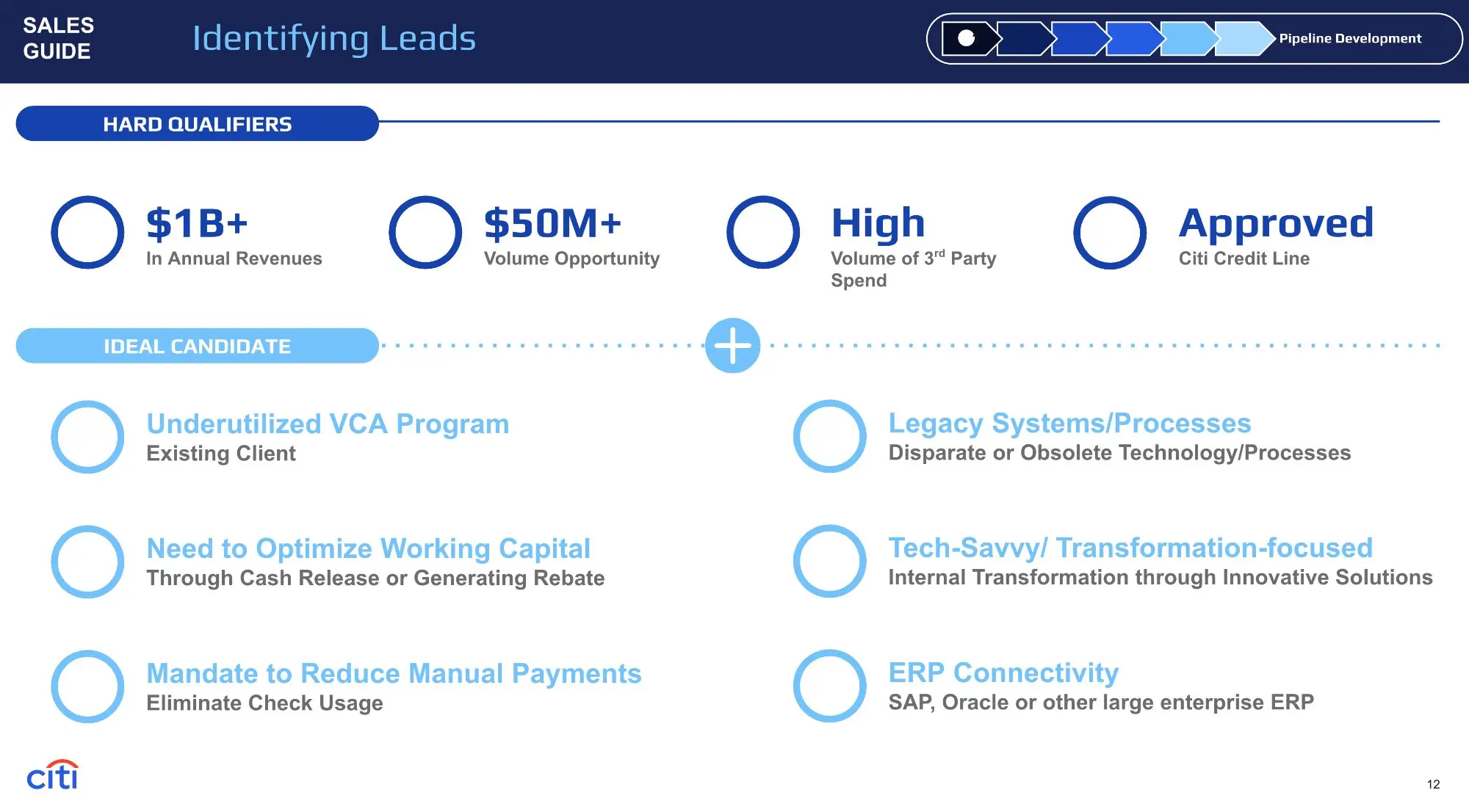
The target enterprise client was organisations with high card programme potential but chronically low supplier adoption, typically because inflexible AP processes made early payment impossible and card acceptance too costly for suppliers. One Mastercard relationship manager had a client fitting that profile exactly: Motorola. Prioritising it as a pilot, Track InstantPay delivered a 5x uplift in card volume, the proof point every subsequent conversation was built around.

2

Translate the proposition for the card environment

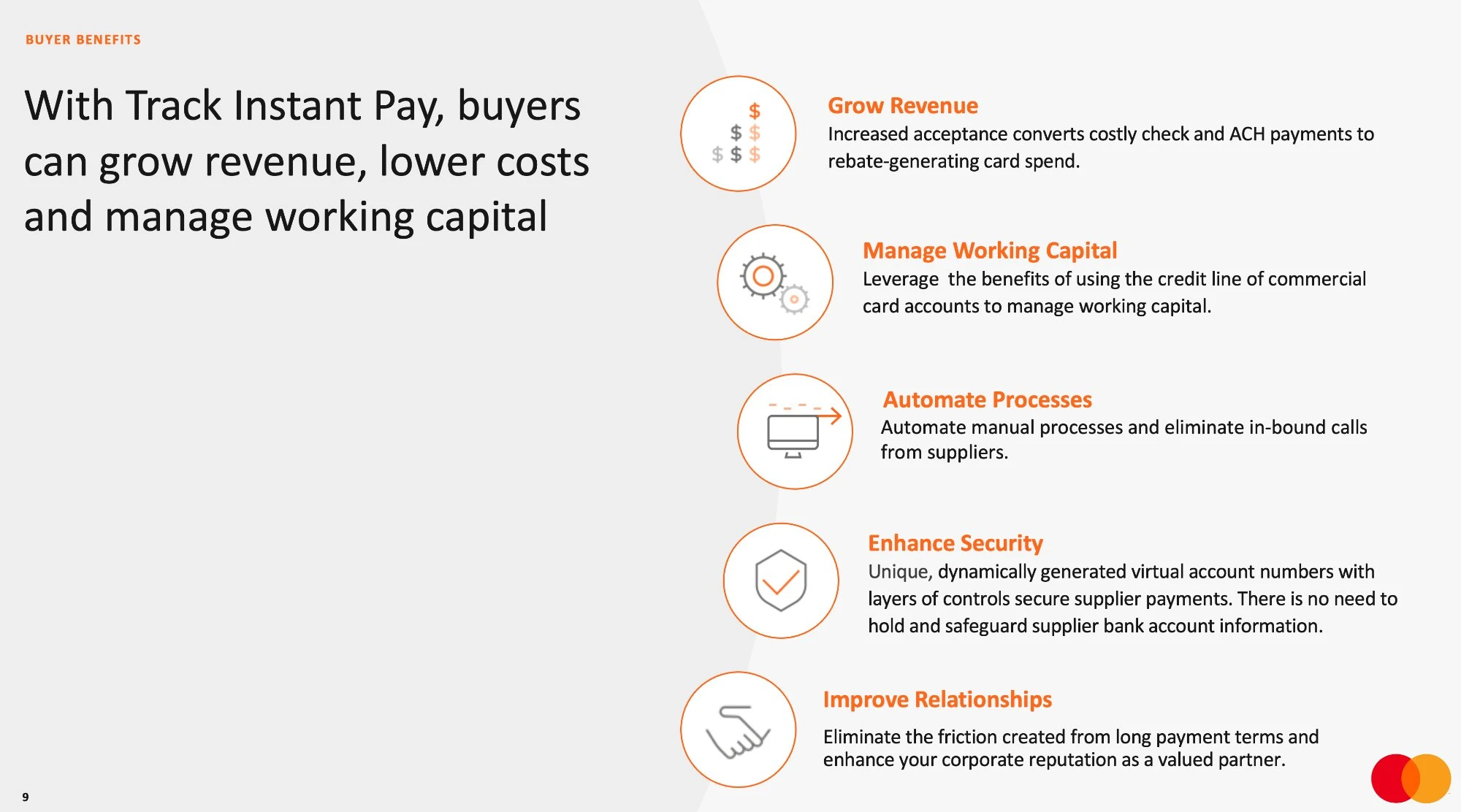
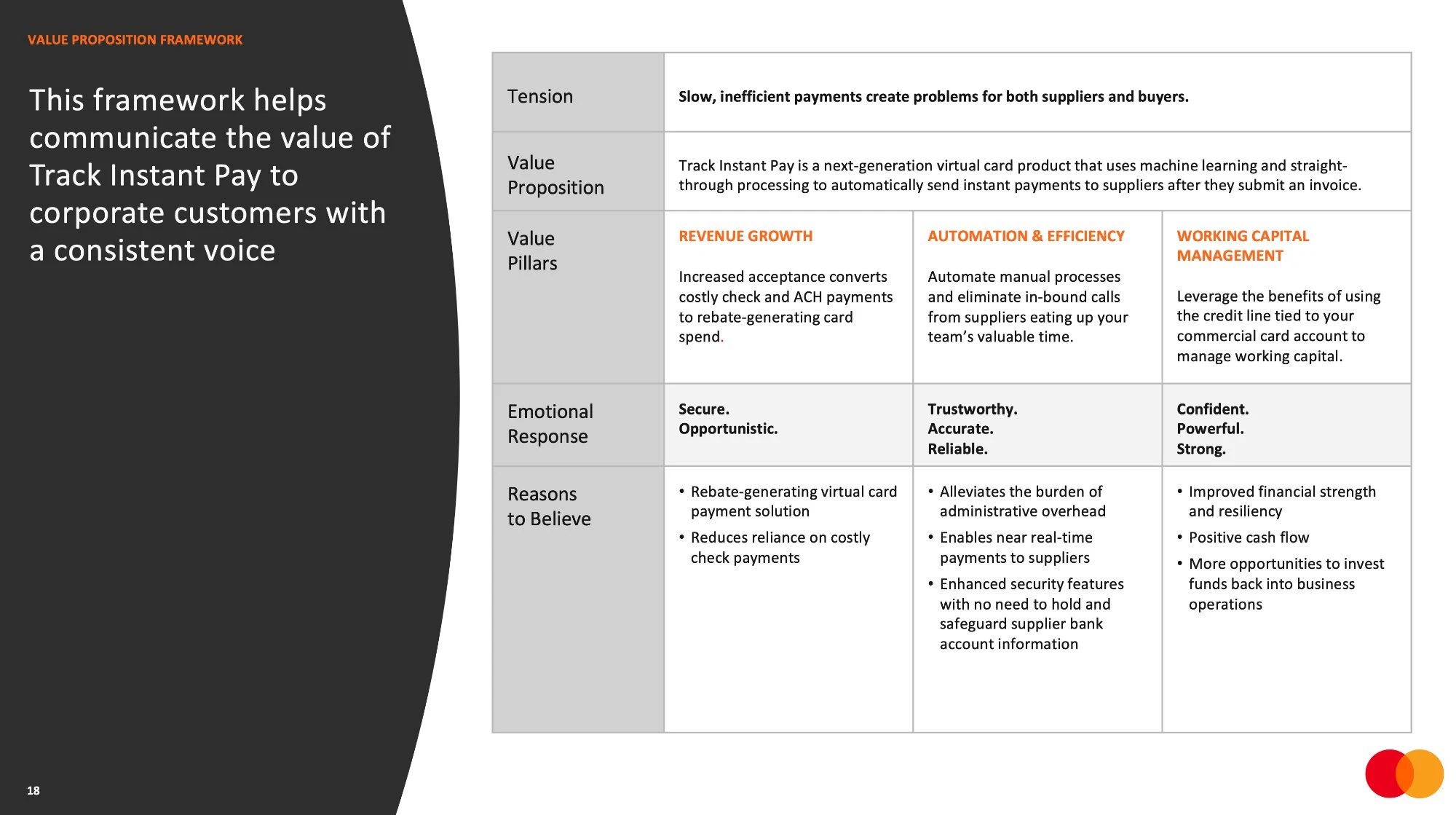
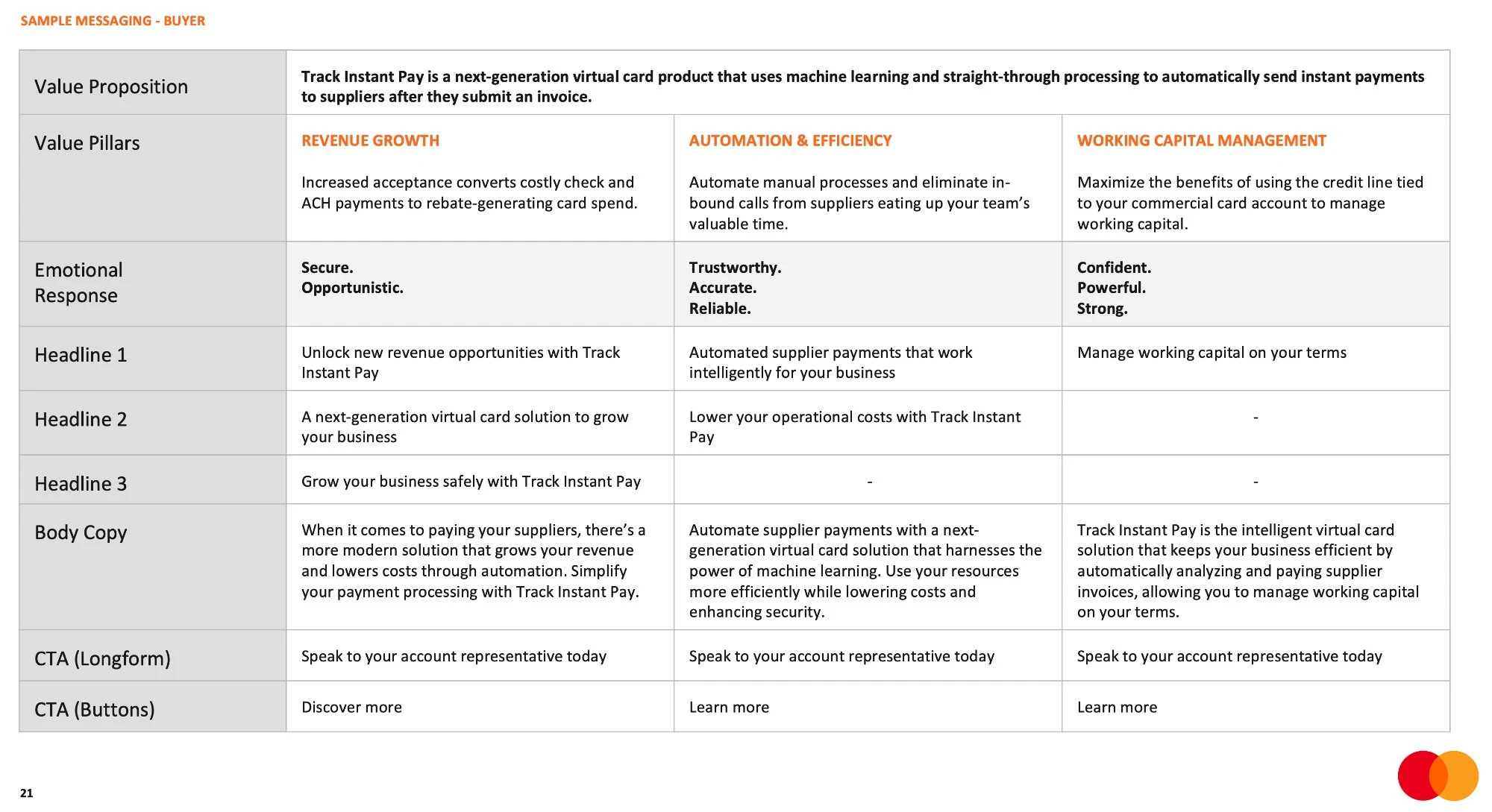
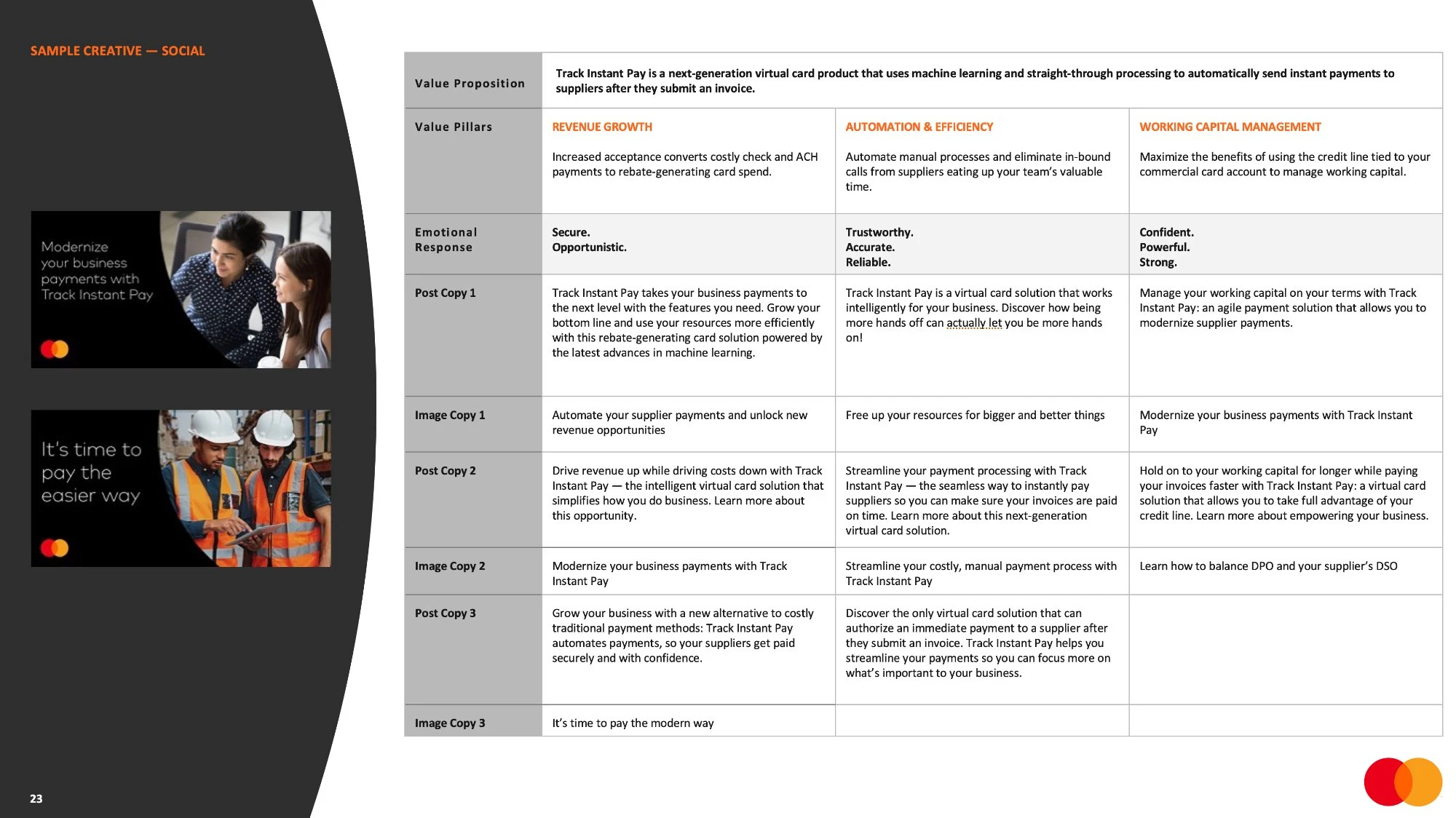
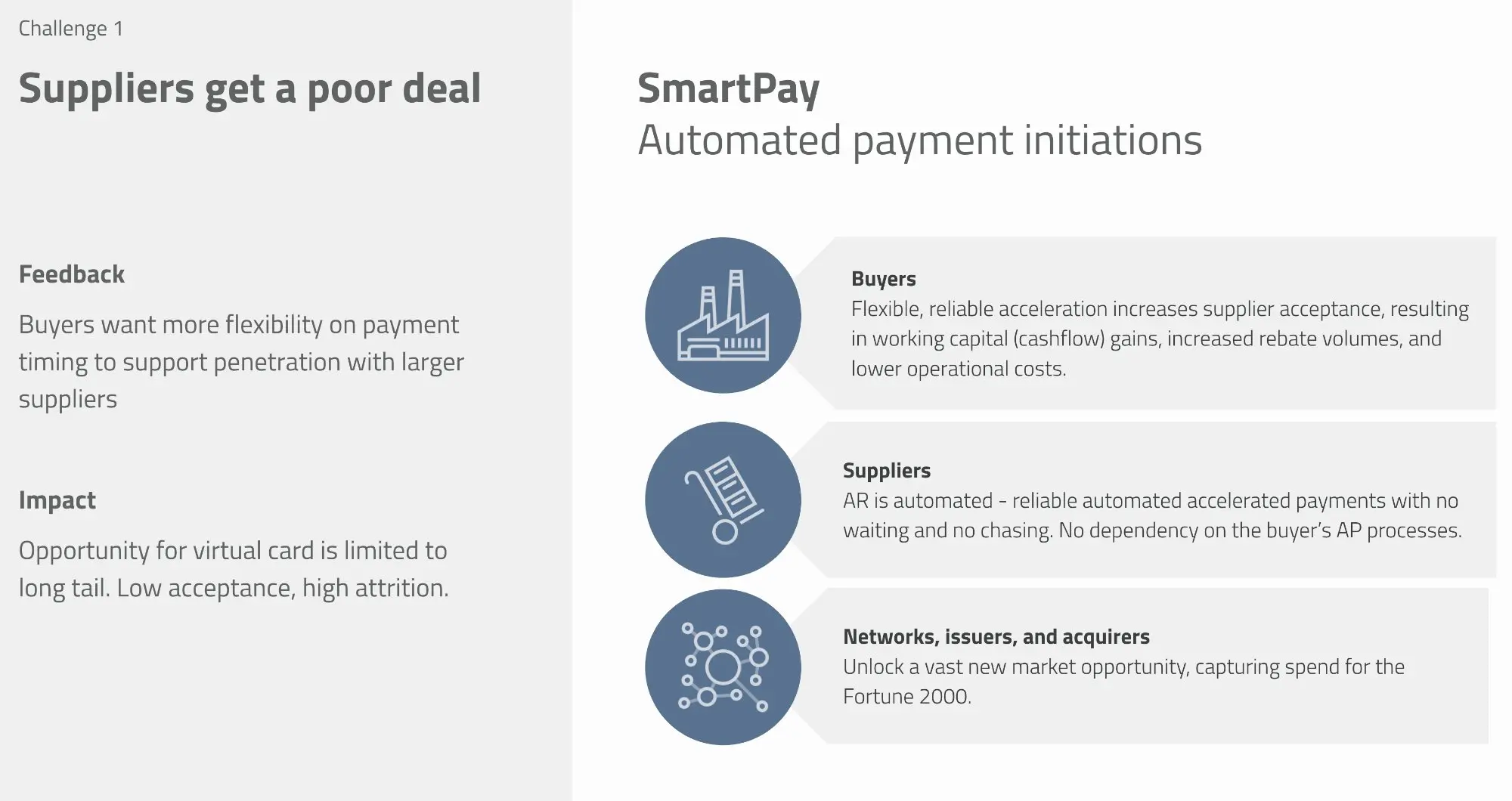
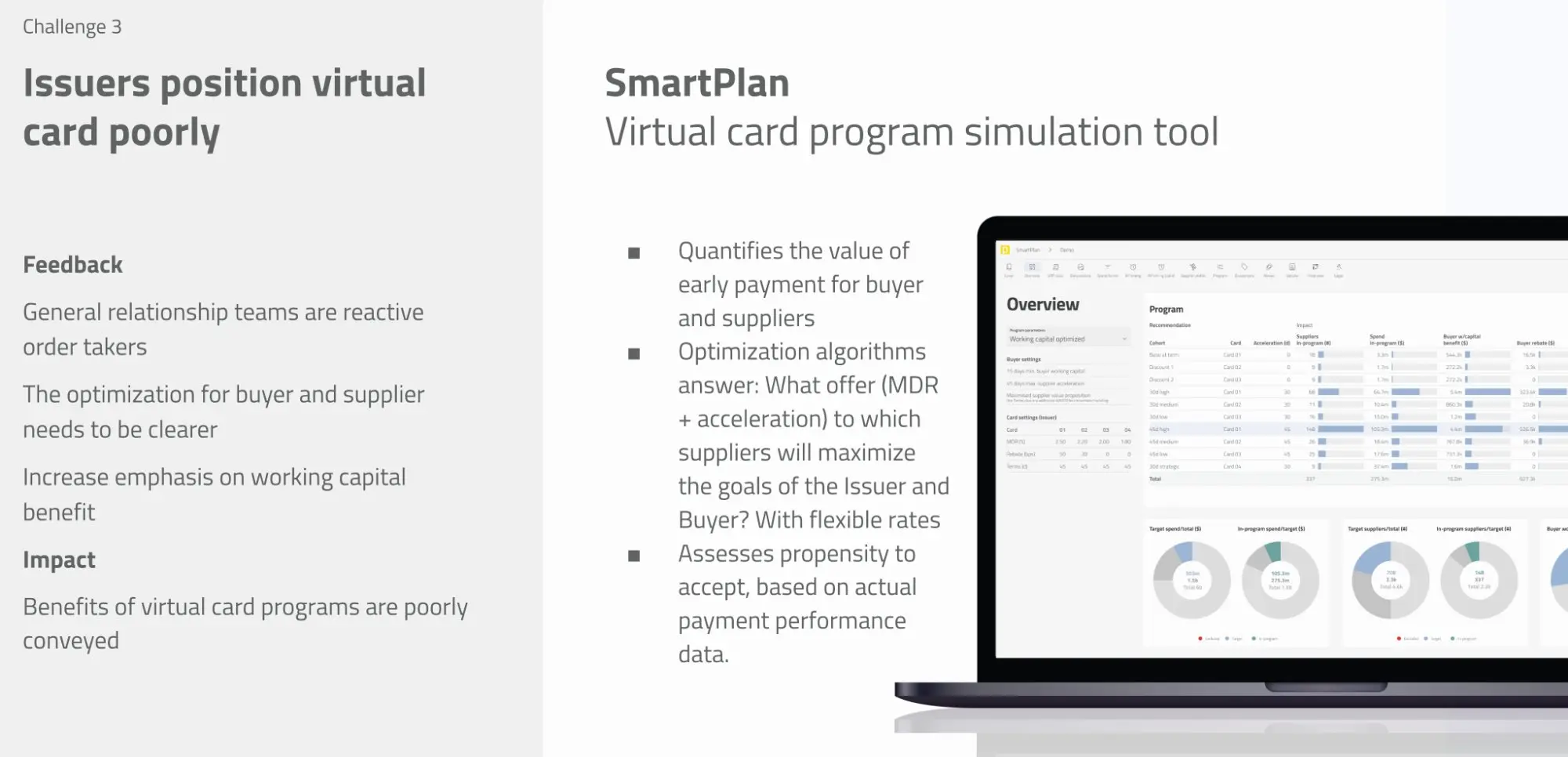
The InstantPay value proposition, messaging and creative all required significant reworking for the card rails context. The core logic held, early payment accelerates supplier adoption, which increases card volume and buyer rebates, but everything had to be rebuilt in the language of card programmes that Mastercard’s distribution team, their banking partners, and enterprise clients would immediately recognise and engage with.

3

Competitive and objection landscape mapping

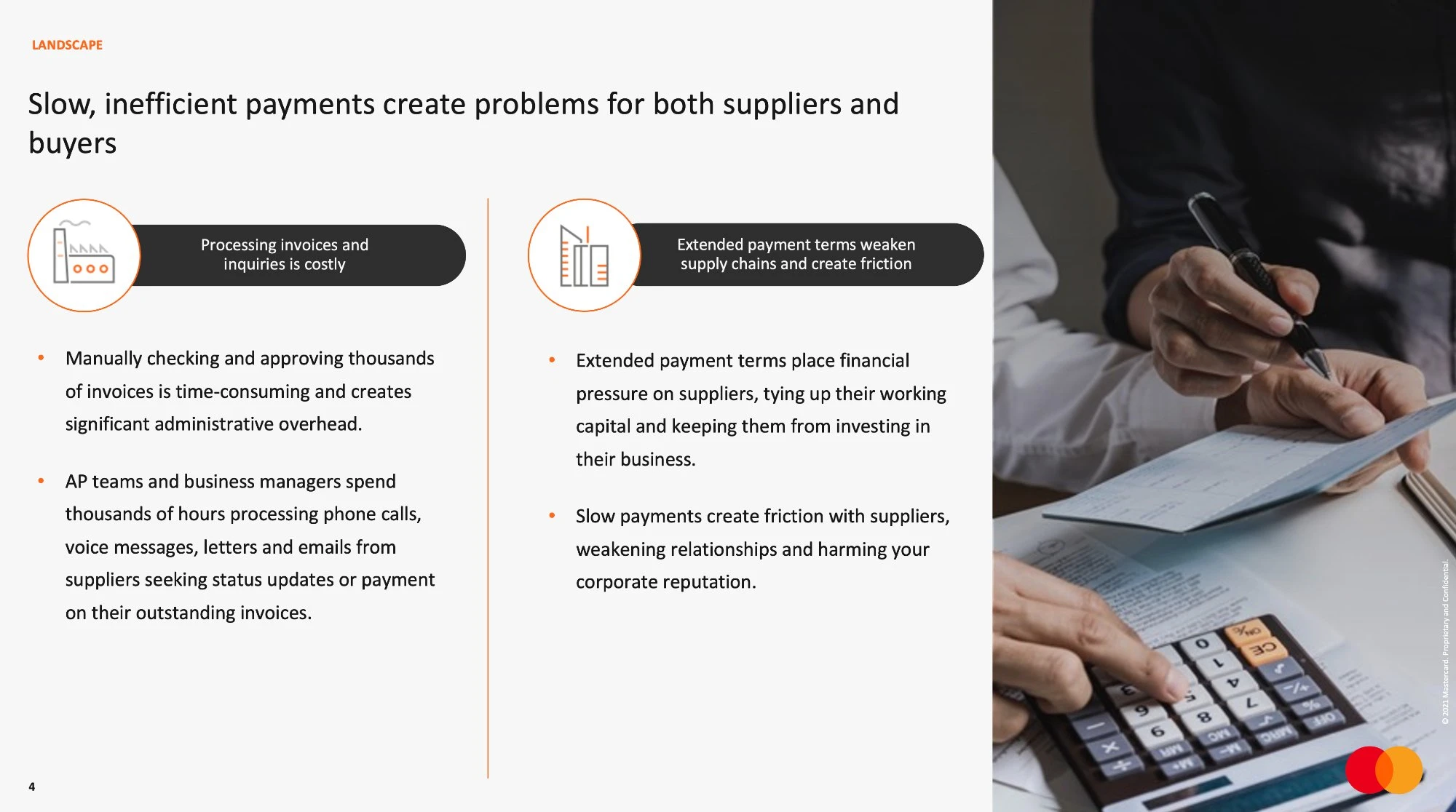
Early conversations with the Mastercard distribution team surfaced a consistent set of objections around card acceptance costs, supplier resistance and the complexity of onboarding. These were mapped against the competitive alternatives banks were already familiar with, and the proposition was refined to address each objection directly. The resulting objection handling framework became a core component of the playbook and shaped how the product was introduced to banking partners.

Activation campaigns at every tier

With the proposition ready and the pilot proving the commercial case, the work shifted to scaling across three layers simultaneously: equipping the Mastercard distribution team, working through banking partner approvals, and then enabling each bank’s own sales teams and ecosystem partners to take the product to enterprise clients.

1

Build the playbook and activate the distribution team

A playbook was built covering the solution overview, pain point framing, objection handling and background content for deeper banking partner questions. Delivered through a face-to-face briefing session, regular team touchpoints and one-to-one consultations with each of the 15 relationship managers, the activation programme ensured every member of the distribution team could position the solution confidently and independently before any banking partner conversations began.

2

Navigate banking approvals and localise for each bank

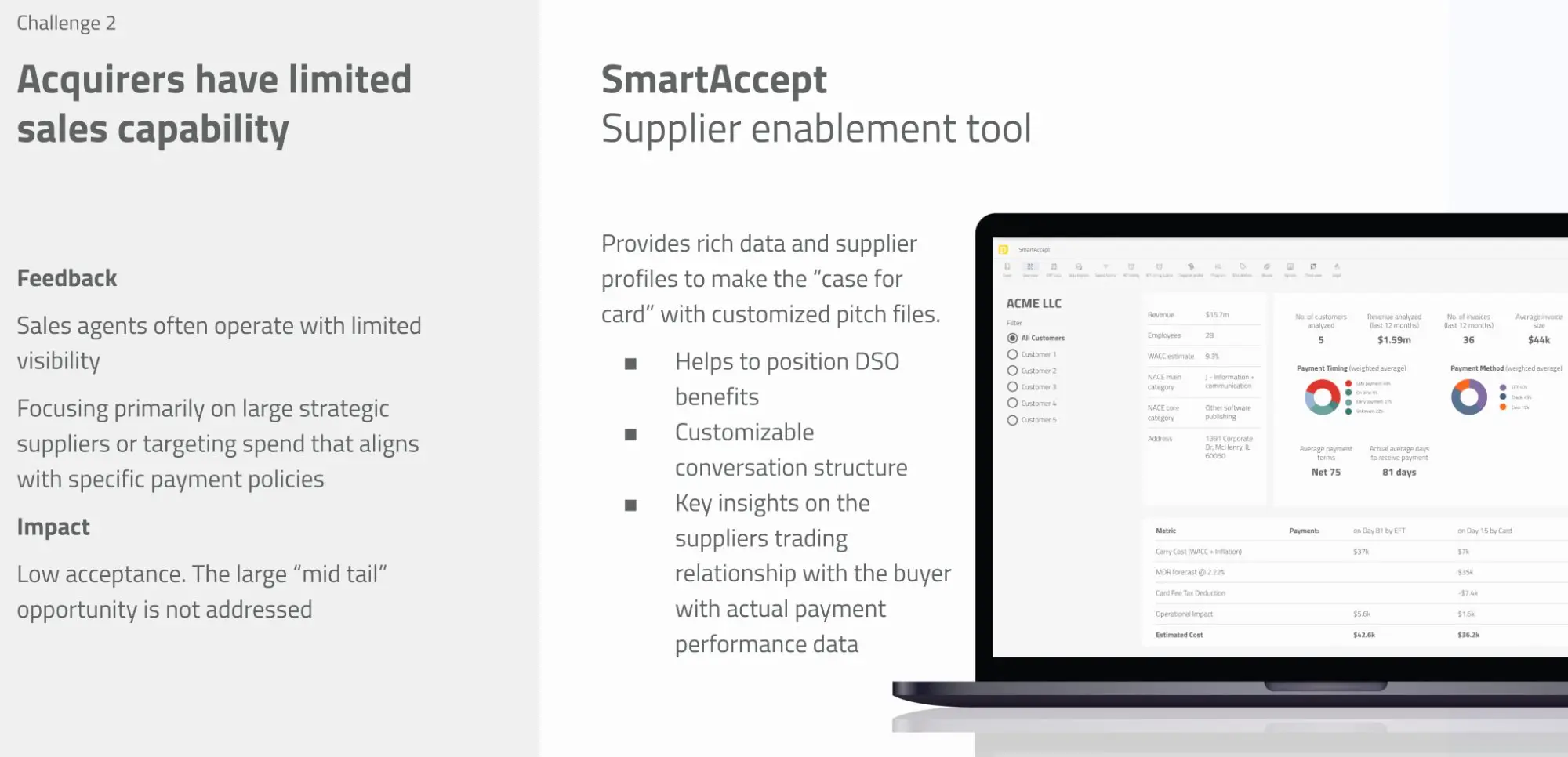
Citibank and HSBC were first to come forward. Getting them to market required working through each bank’s product approval, risk, security and compliance processes, generating extensive technical documentation for each. Once cleared, the proposition was localised to each bank’s card programme context with a dedicated content suite: introduction decks, FAQs, proof of value presentations, opportunity assessments and introductory email sequences, 20-30 pieces per bank. Briefings extended to merchant acquirers and supplier enablement teams across the full card programme ecosystem.

3

Run the activation campaigns

Activation began by working with each bank’s relationship team to identify enterprise clients against the ICP. Relationship managers were armed with targeted communications and supported by a dedicated channel sales specialist team, ensuring they could open conversations without absorbing the full technical depth of the product. The activation campaigns generated $20M in ARR pipeline within three months of rollout.

4

Evolution of the product

Field feedback was captured systematically, concerns and objections surfacing in client conversations were fed back into updated materials and shared across the full distribution team on a regular cadence. It directly informed the product evolution: as new functionality was developed, messaging and content were refreshed and re-briefed across the channel. Track InstantPay eventually became SmartPay — a rename that reflected a materially broader capability set and gave the channel a fresh platform to reopen conversations with existing banking partners.

In conclusion

Three tiers of channel. A global payments infrastructure player,  global banking partners, Fortune 2000 clients. This level of complexity can create drift, messaging that diverges, sales teams that lose confidence, pipeline that stalls. What prevented it here was a relentless focus on keeping every tier of the channel informed, enabled and equipped to have the next conversation. That focus is what the pipeline generation represents.

Get in contact

Whether you need focused help on a specific challenge or ongoing support, I'd love to hear what you're working on, to see if I can help.