Enabling SaaS sales at scale

Product Messaging & Sales Enablement
Turning a remote sales team of 500 into confident SaaS advisers

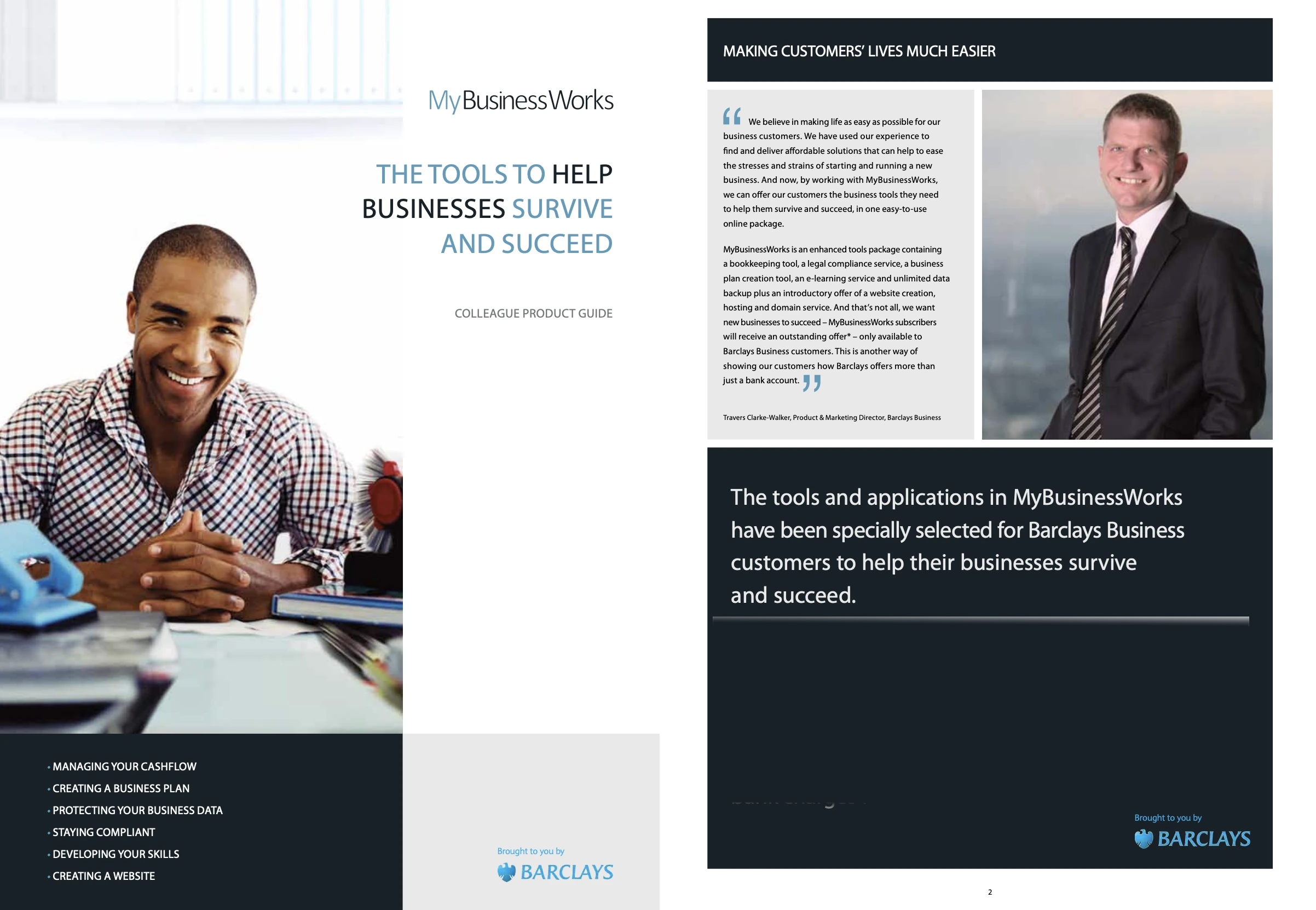
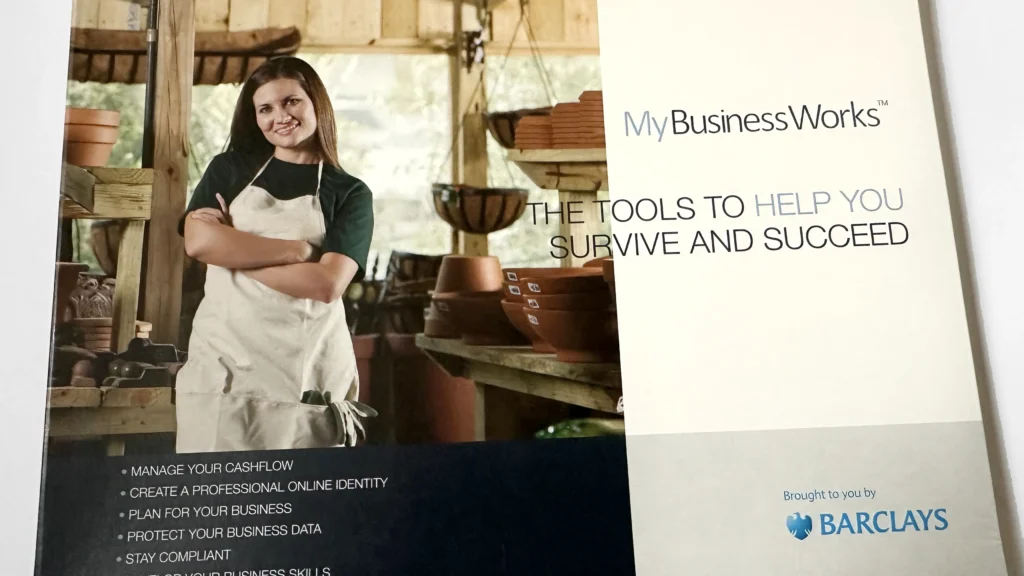
We had won Barclays as a client and they had the distribution, 500+ relationship managers in branches and business hubs across the UK. The challenge was making them confident enough to sell. MyBusinessWorks brought together a broad suite of SaaS tools into a single proposition, but the messaging had to work for two very different audiences: businesses just starting out and established SMEs with more complex needs. We had work hard to develop messaging that was clear and could be delivered consistently across the distributed team.

Results

  • 150,000 SME paying users acquired within three years
  • 70% of the salesforce actively selling within three months of launch
  • Proposition live across all channel touch points within two weeks of launch

Turning a complex product suite into a simple, sellable story

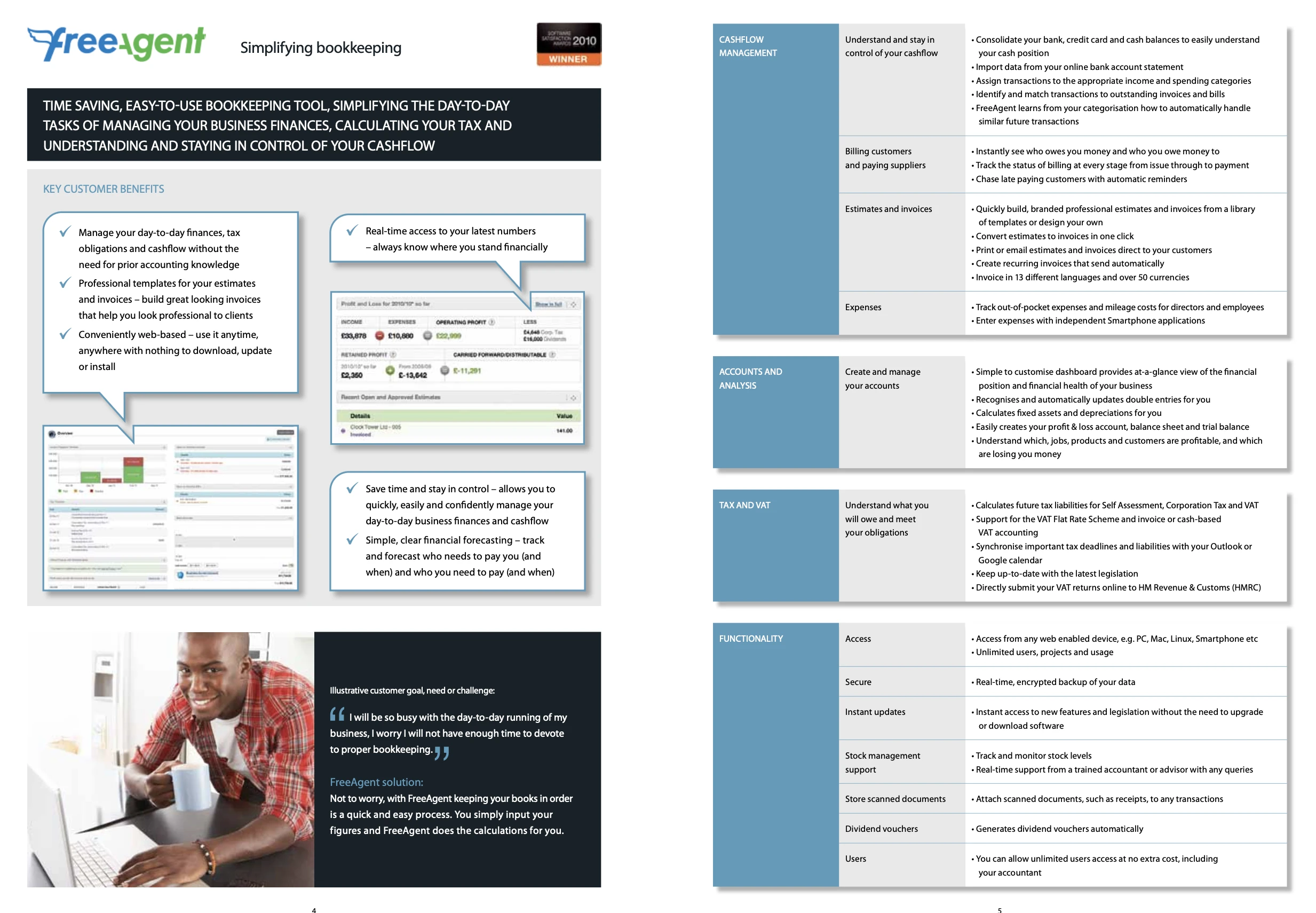
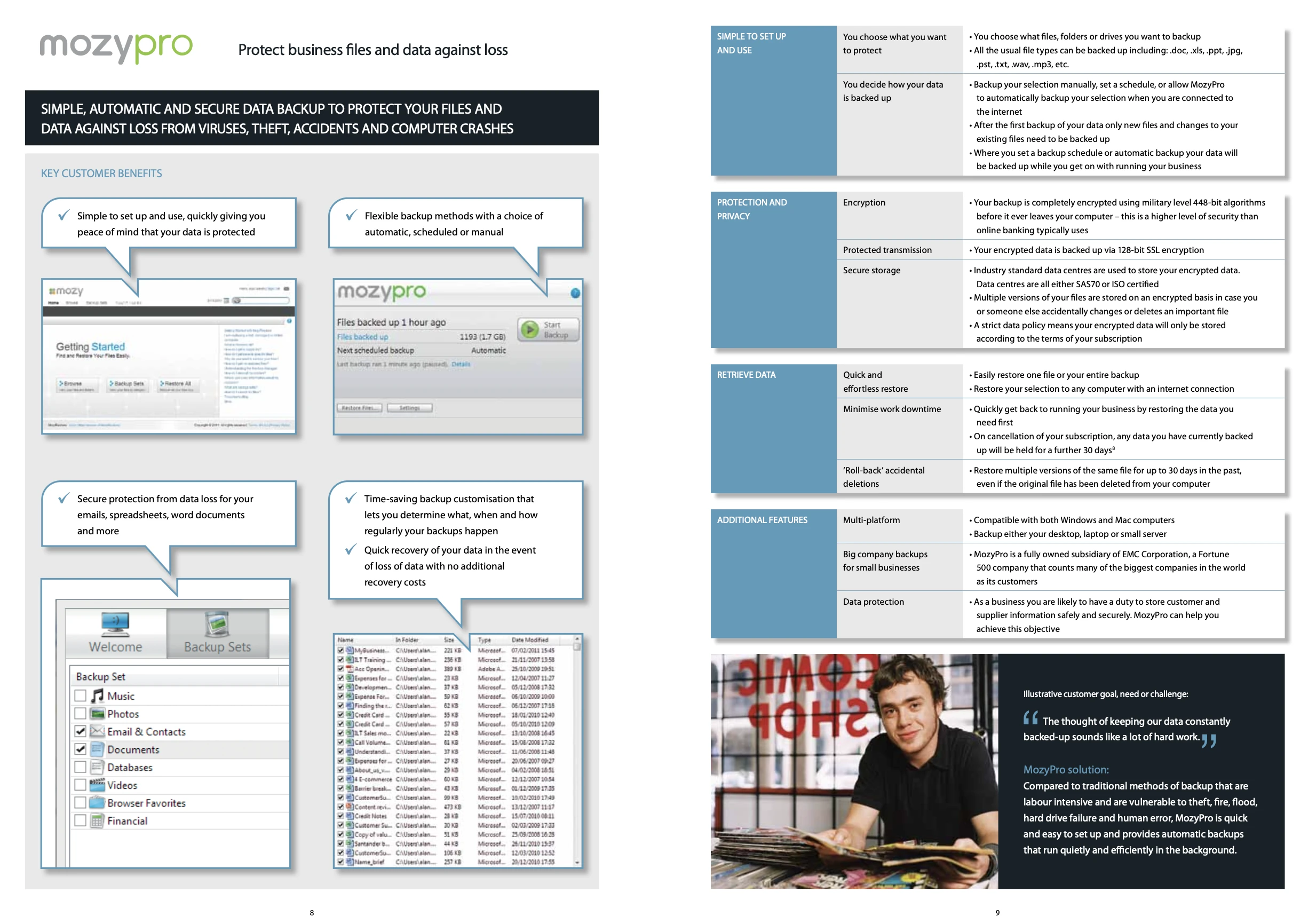
Winning Barclays as a distribution partner was the only the start, the next challenge was making their salesforce believe in what they were selling. MyBusinessWorks brought together a broad suite of business tools, but breadth creates complexity, and complexity kills confidence at the point of sale. Before any enablement could be built, the proposition needed to be distilled into something a relationship manager could deliver naturally, in the flow of a conversation they were already having with a customer.
1

Starting with persona research

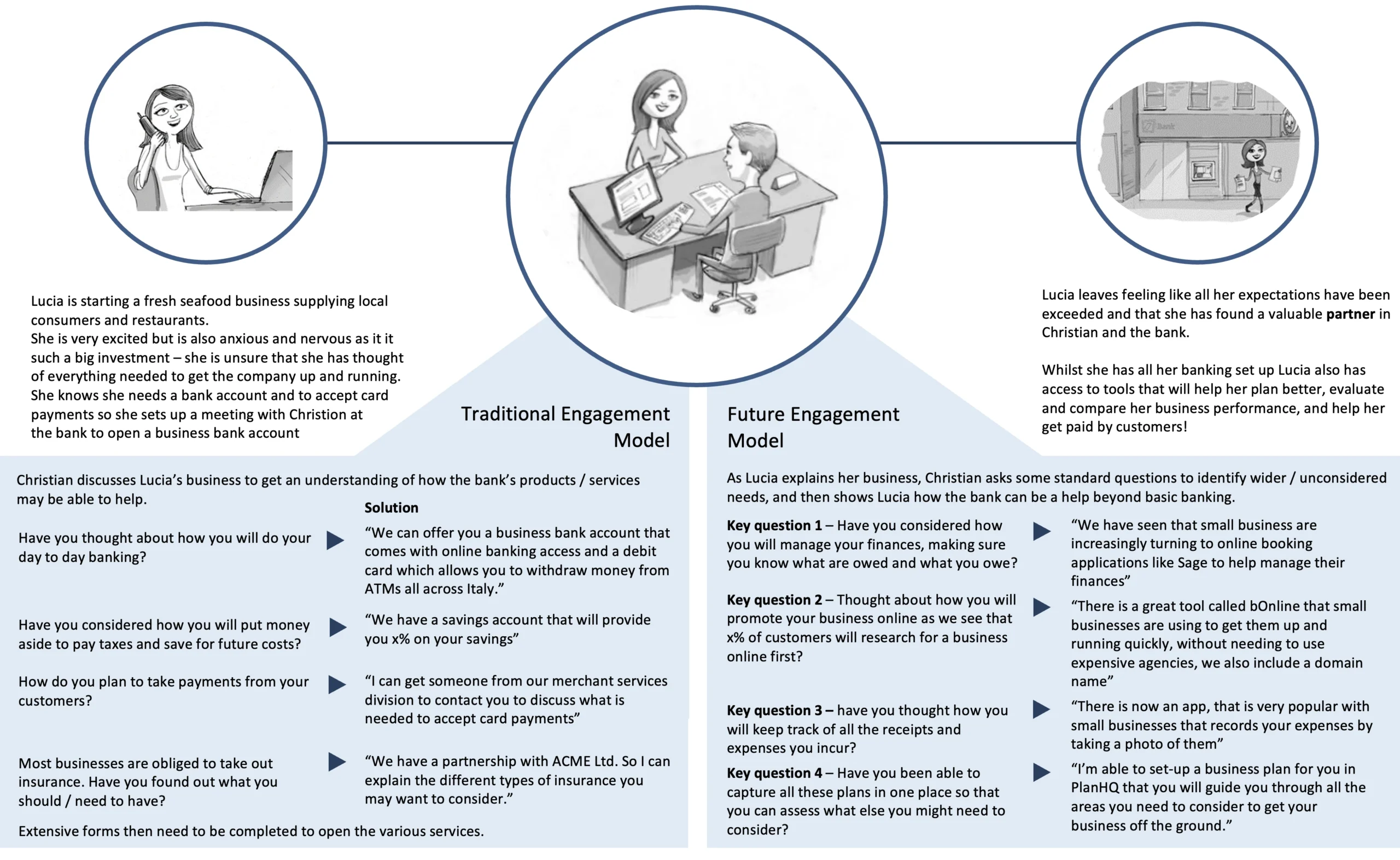
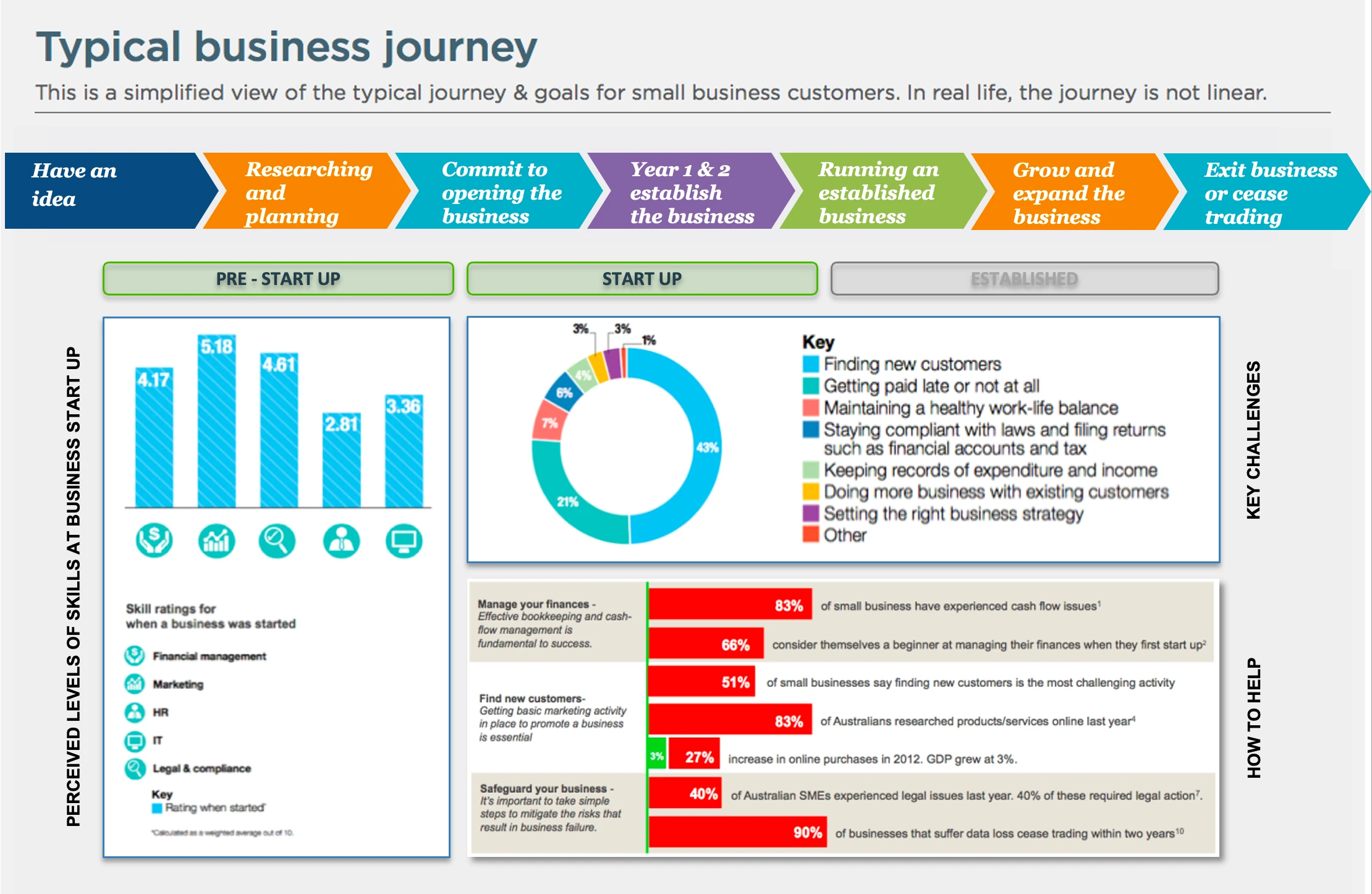
Research into the pain points at each lifecycle stage of the two personas revealed the engagement needed to work very differently. For businesses just starting out, the entry point was aspirational and needs-based – keys had to be high-level and explore things they might not have thought of. For established SMEs, it went deeper into operational challenges they were experiencing. The findings became the blueprint for mapping both the narrative and the sales conversation.

2

Building the messaging architecture

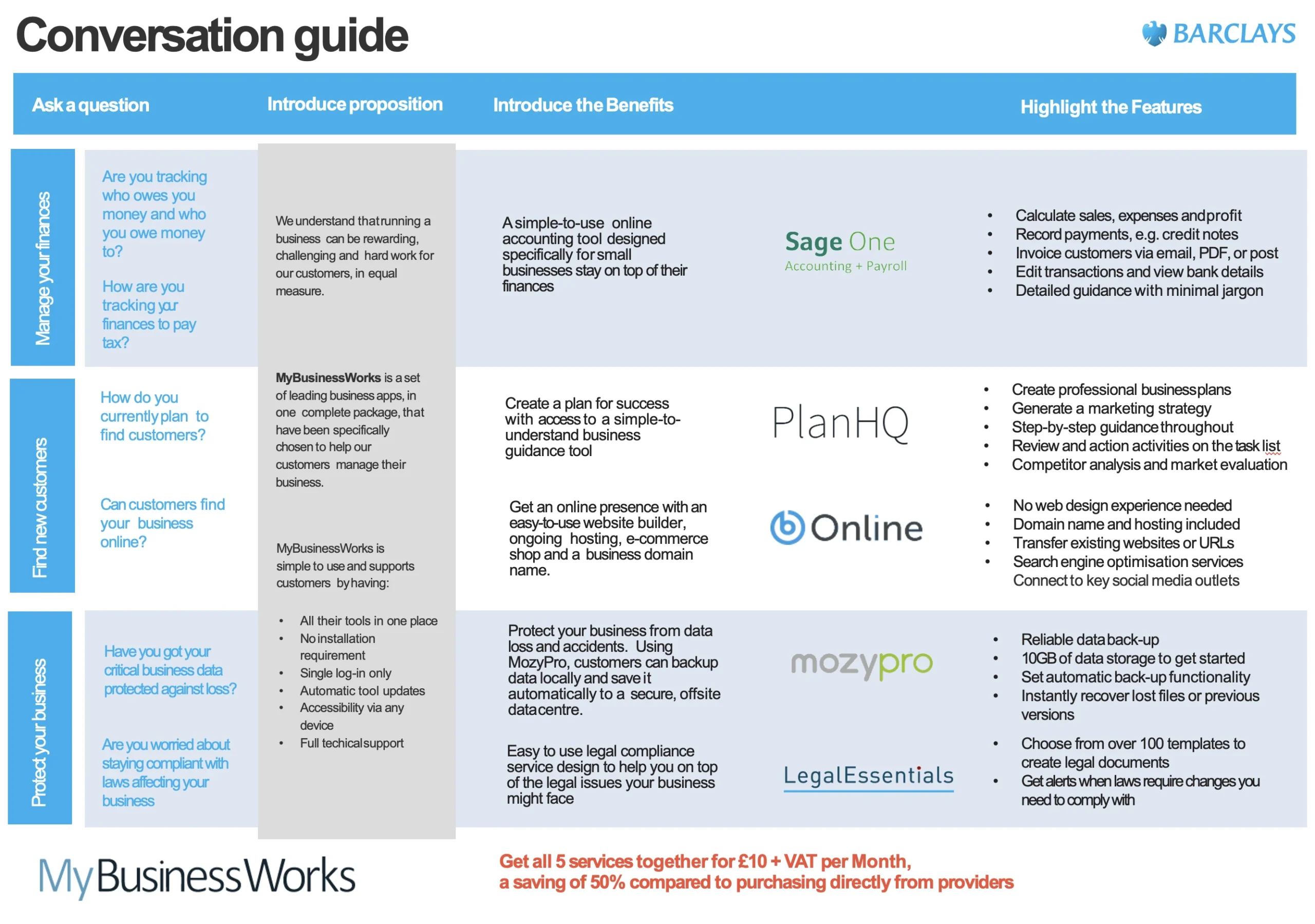
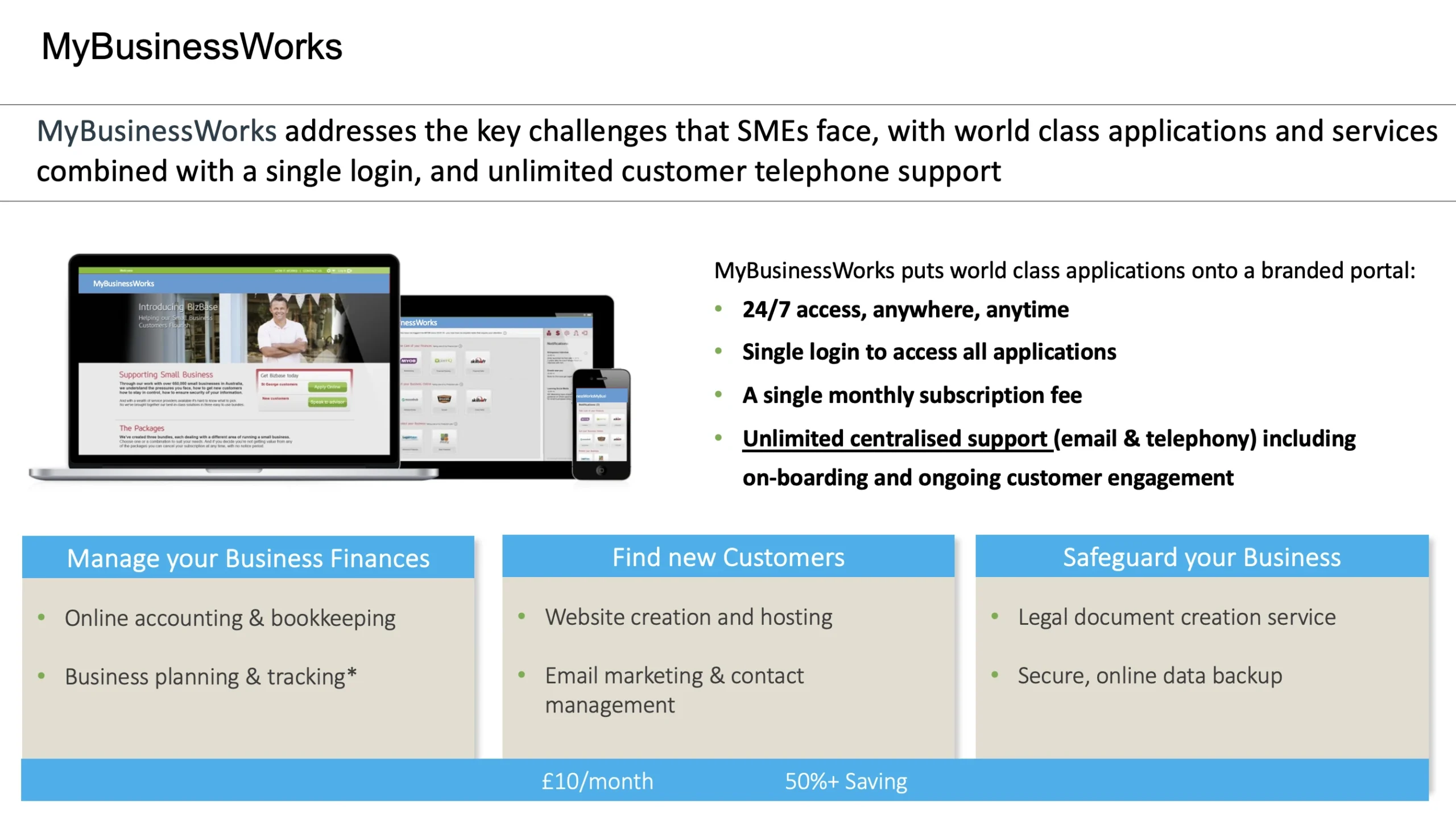
With the customer personas mapped, the messaging hierarchy followed. A single organising statement, “we’ve brought together a range of tools to help your business survive and succeed”, gave the salesforce a consistent opening. Beneath it, three clear value pillars: Manage Your Business Finances, Find New Customers, Safeguard Your Business. Simple enough to recall under pressure but specific enough to start a conversation.

3

Analysing the sales environment before building the tools

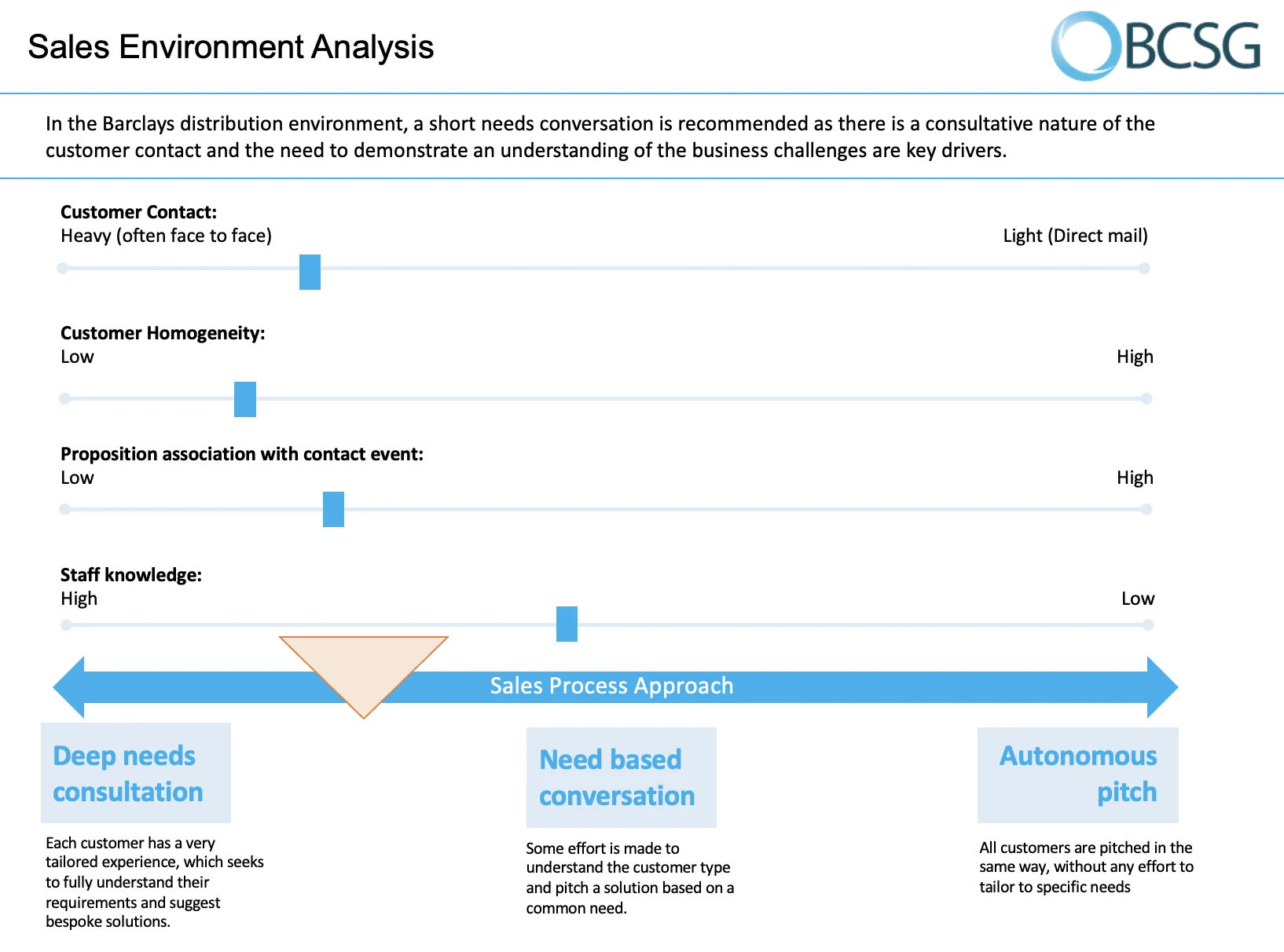
Understanding the sales environment before building anything revealed what agents were already selling, where their confidence sat, how they were targeted and what incentivised them. That diagnostic shaped everything: the complexity of the sales tools, the depth of training required, and how the proposition needed to sit alongside existing banking conversations.

4

Designing the sales conversation

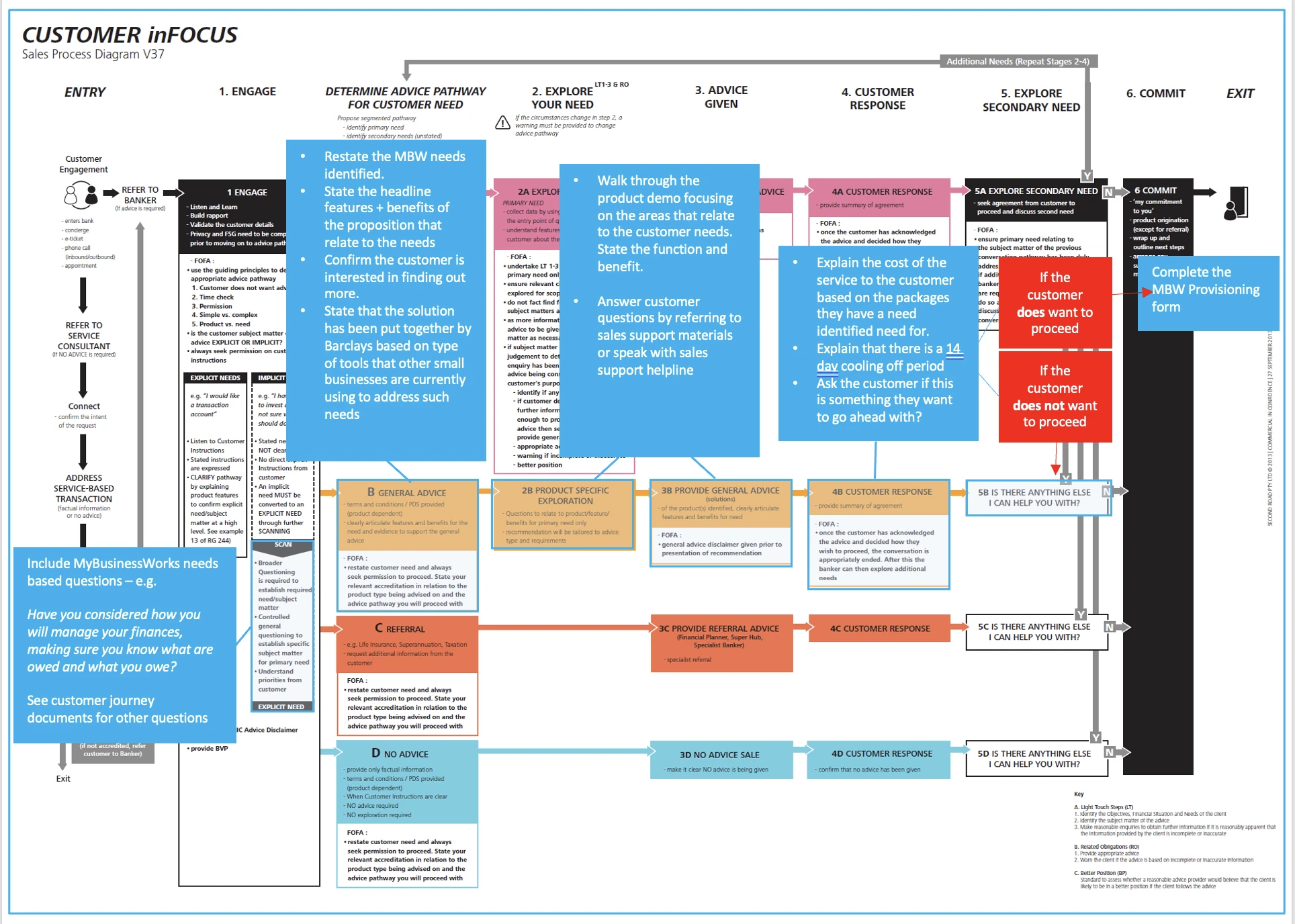
Translating the proposition into a sales conversation meant understanding exactly how value needed to land, not in a product demo, but in the flow of a routine banking relationship conversation. The language, the entry points, the proof points that would resonate, it had to be specific to what agents were already saying and what customers were already asking.

5

Building the tools to deliver the conversation consistently

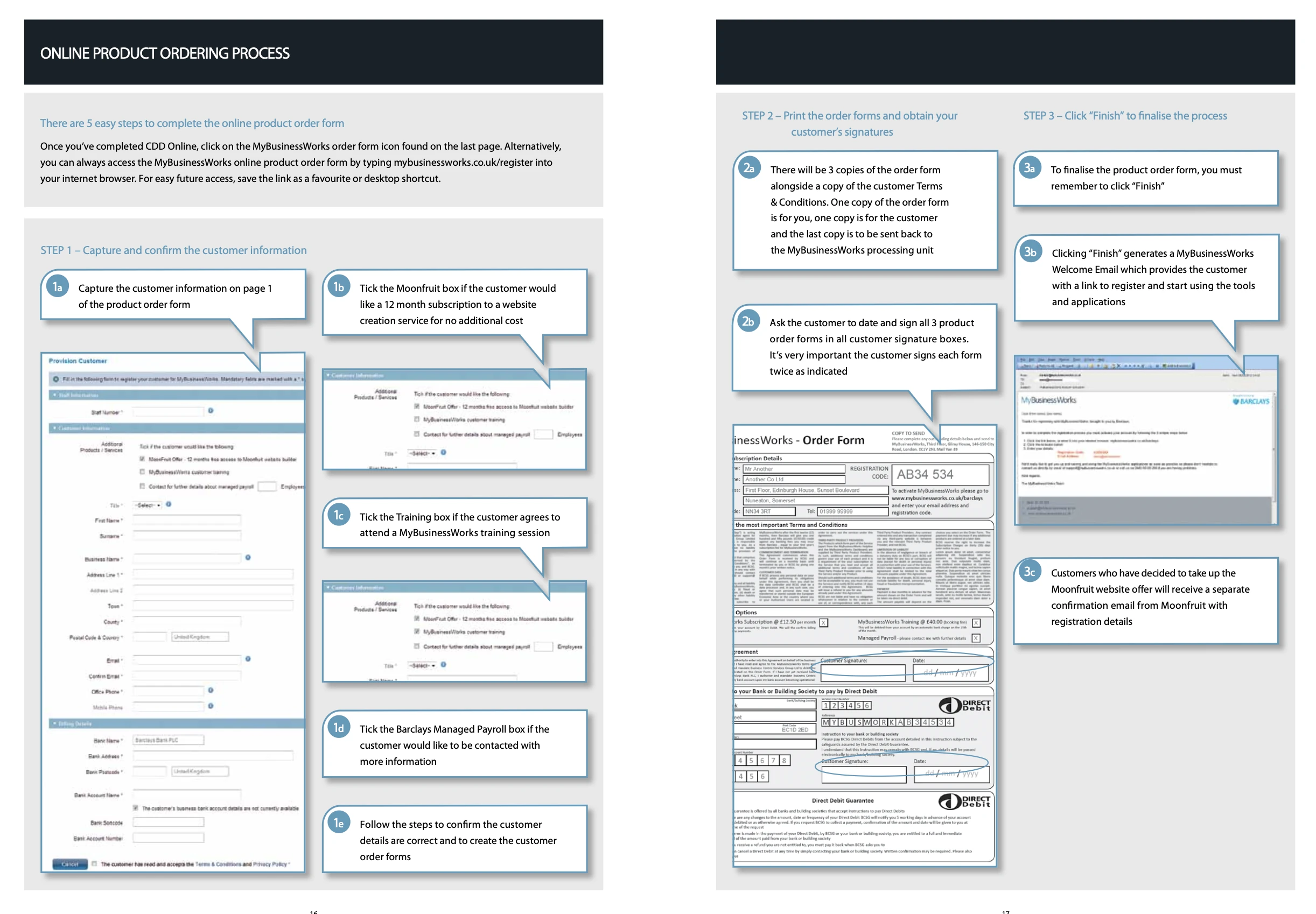
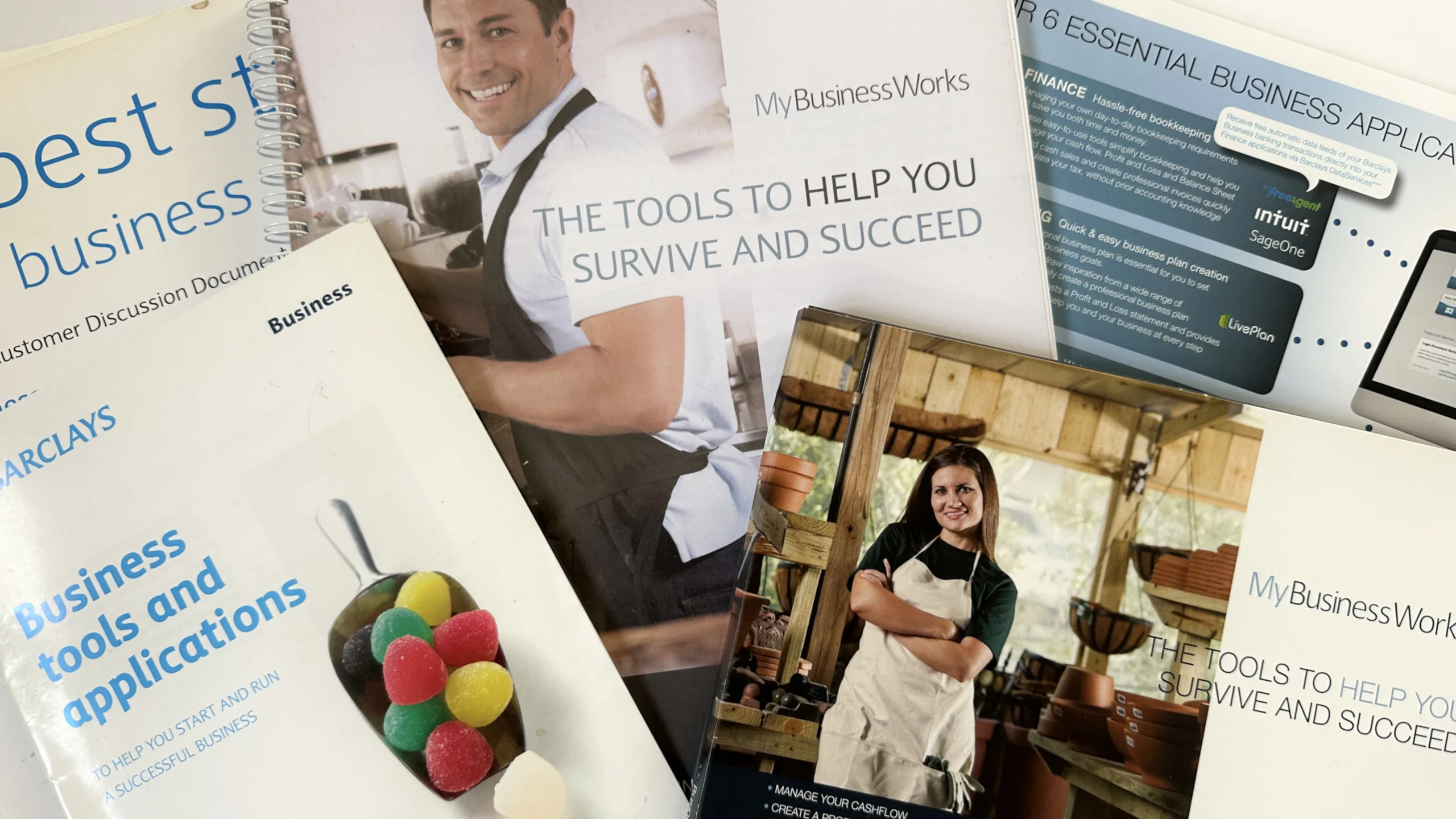
With the sales conversation defined, the next task was arming the salesforce with the tools to deliver it consistently. A full suite of branch-ready assets was developed, proposition overviews, FAQs, customer takeaway cards, objection handling guides, product comparison sheets and conversation prompt cards, ensuring every agent had what they needed at the point of sale.

Equip the salesforce to deliver it consistently

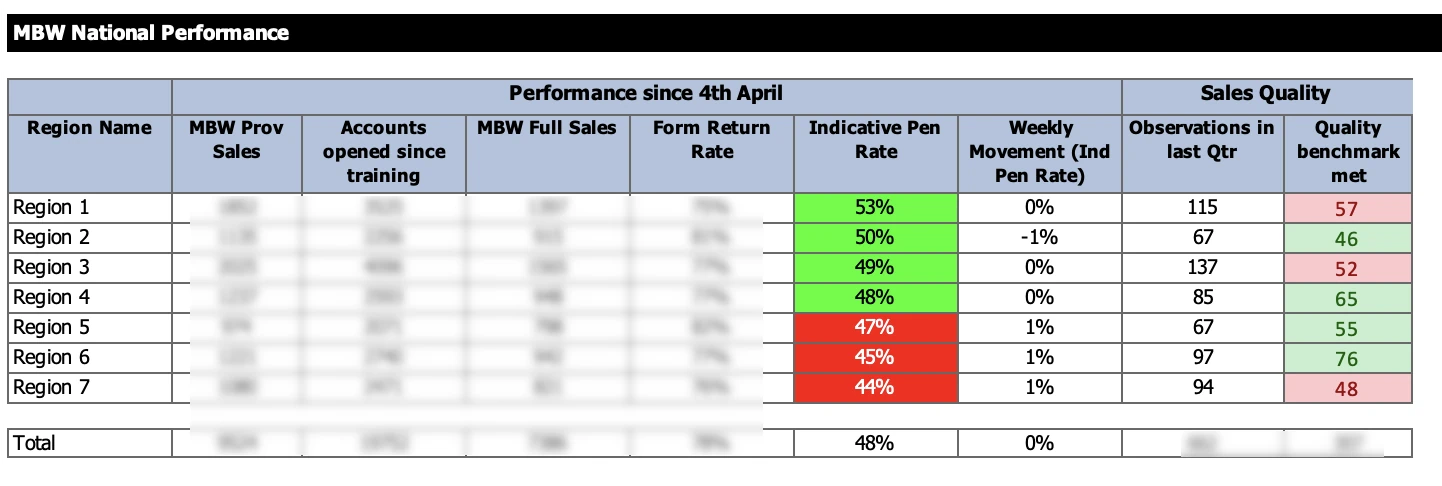
Creating the messaging and sales tools was only part of the challenge. Getting 500+ remote sales managers across the UK confident enough to deliver it consistently, in the flow of a natural conversation, required structured sales enablement: training that built product knowledge, activation programmes that drove early adoption, and ongoing support to ensure confidence was translated to conversations with customers.

1

Train to build confidence

A structured training programme was developed, designed to provide product knowledge, sales conversation confidence and clarity on positioning. Rollout was phased across regions, allowing early learnings to sharpen delivery through Pathfinder before national scale. A champions model sustained momentum, identifying advocates in each location to model the right behaviours, support peers and keep the framework alive on the branch floor.

2

Monitor, measure, refine

Sales conversation quality and activity metrics were monitored regularly across regions, identifying where the conversation was being executed well and where confidence or clarity was slipping. Findings fed directly back into coaching, regional drop-in sessions and refreshed enablement materials to close the gaps.

3

Coordinating the promotional roll-out

With sales enablement in place, the promotional rollout activated every available channel, in-branch collateral, online banking, digital and social touch points, all went live within weeks of launch. This helped awareness to scale rapidly, ensuring the sales conversation was reinforced wherever a customer encountered the brand.

In conclusion

MyBusinessWorks reached 150,000 SME customers in three years, but the bigger achievement was the one that made it possible: getting a dispersed salesforce to deliver a complex proposition simply, consistently and with confidence. That required going deep on the customer research, building a messaging structure that could be easily understood, and designing an enablement programme that built confidence. With the scale of the distribution channel, the difference between a successful launch and a forgettable one is almost always execution.

Keep exploring

Get in contact

Whether you need focused help on a specific challenge or ongoing support, I'd love to hear what you're working on, to see if I can help.