Beating the unicorns

B2B SaaS Positioning & GTM
Repositioning SaaS technology to outmanoeuvre well-funded competitors

The cloud services market for SMEs was attracting serious investment. Well-funded app marketplace players were racing to sign banks and telcos as distribution partners. BCSG had the capability and the early client wins, but not the category and were bootstrapped. Without a clear position, every enterprise sales conversation started from scratch. The goal was to define a market POV that made our track record impossible to ignore and our competitors’ approach look poorly considered.

Results

  • Three consecutive years of triple-digit growth
  • RFP win rate increased 3x against better-resourced competitors
  • Enterprise clients won across EMEA, North America and APAC

Reading the market before writing the narrative

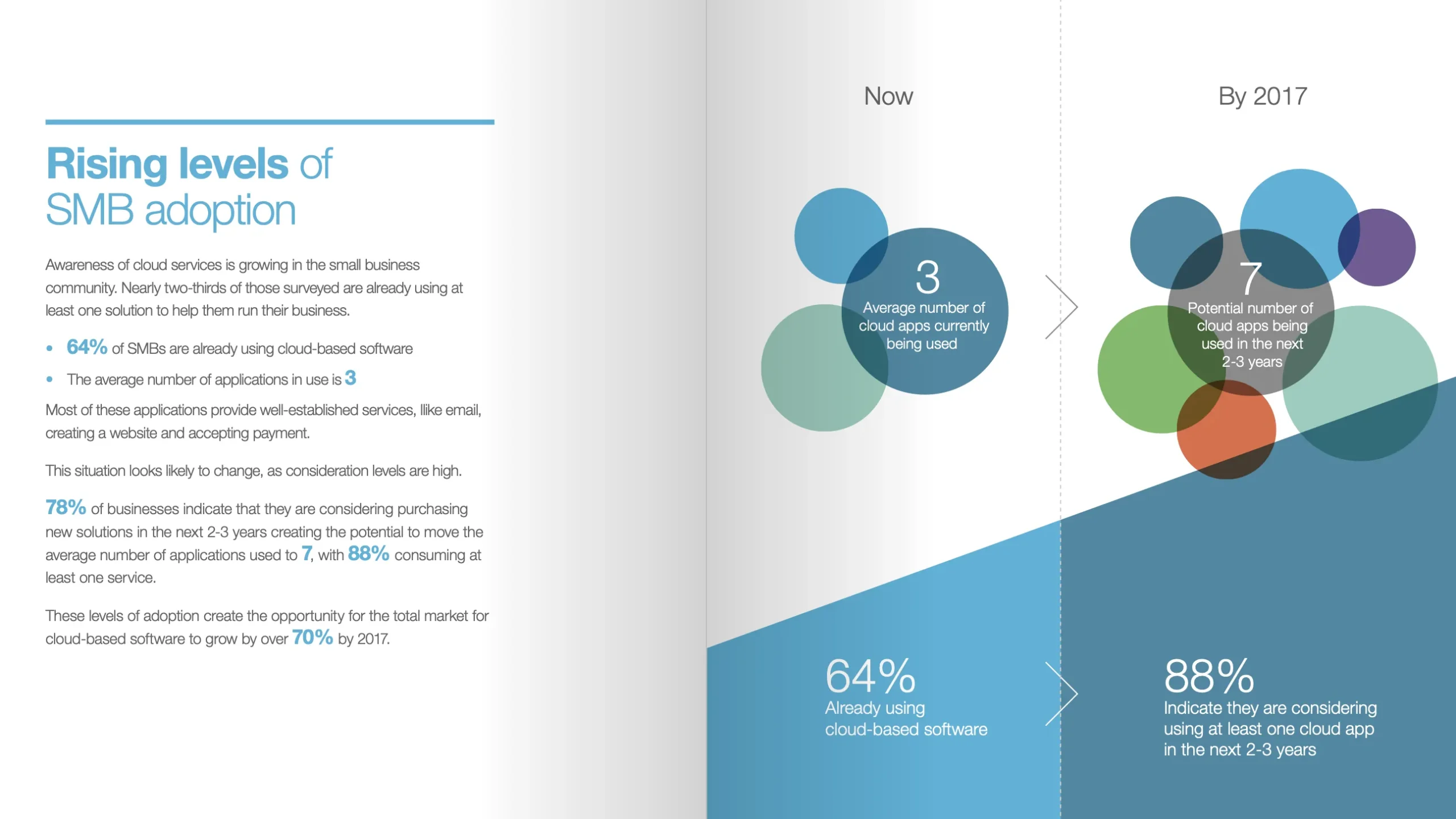
Of all the signals, the most consistent came directly from the market. Product leaders at banks and telcos were saying the same things, almost verbatim: “We need to develop a new SME proposition but don’t know where to start.” “How do I avoid building a white elephant.” Or for those that were already active “I’ve got the tech but I’m not getting any value from it.”
The market was looking for a proven solution that would deliver value.
1

Immerse in the competitive landscape

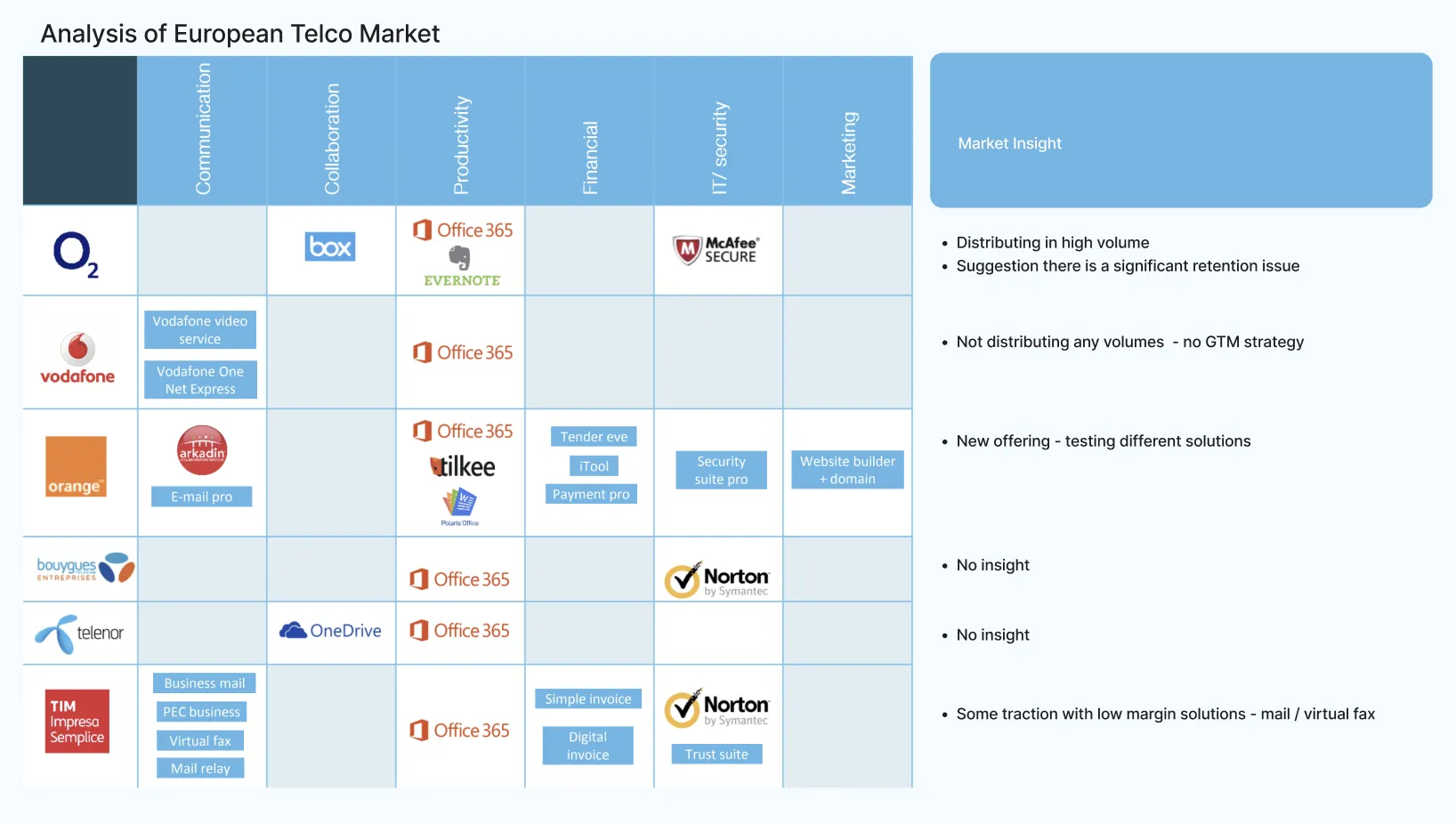
Desk research, trade shows, analyst briefings and panel interviews with channel partners built a clear picture of who was doing what. Of the players doing any meaningful volume in cloud services distribution, only three or four were operational at scale, two of them already BCSG clients. The rest were being bundled into propositions and quietly struggling with activation and attrition.

2

Identify what gave us the right to win

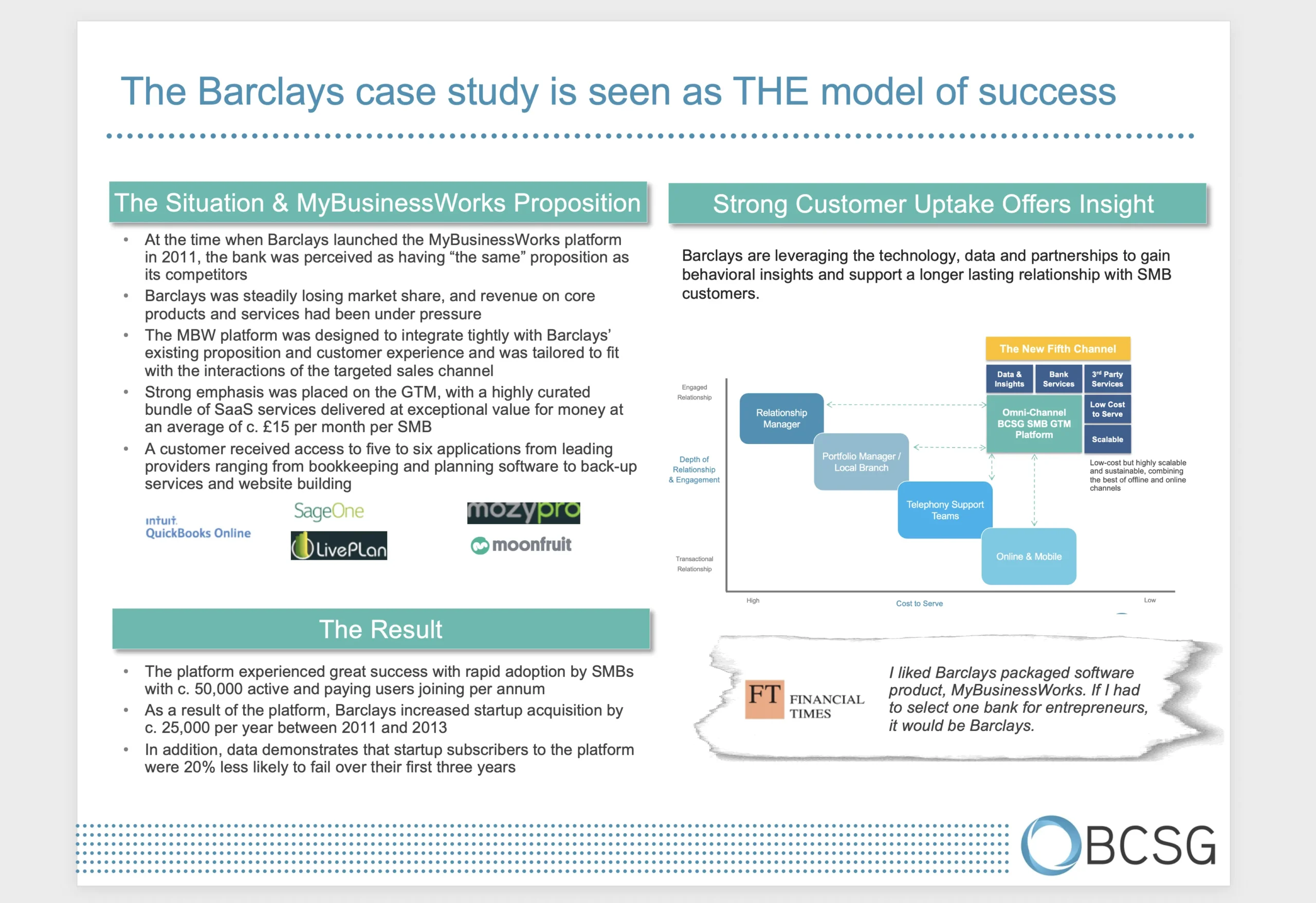
The analysis pointed to a clear and defensible advantage. BCSG had already distributed cloud solutions to over 50,000 SMEs per year through bank and telco brands. The senior team were recognised industry practitioners. Early blue-chip clients, Barclays and EE, were already live. Whilst competitors had investment we had the proof points that could support an alternative narrative. The positioning needed to make that distinction impossible to miss.

3

Aligning the product strategy

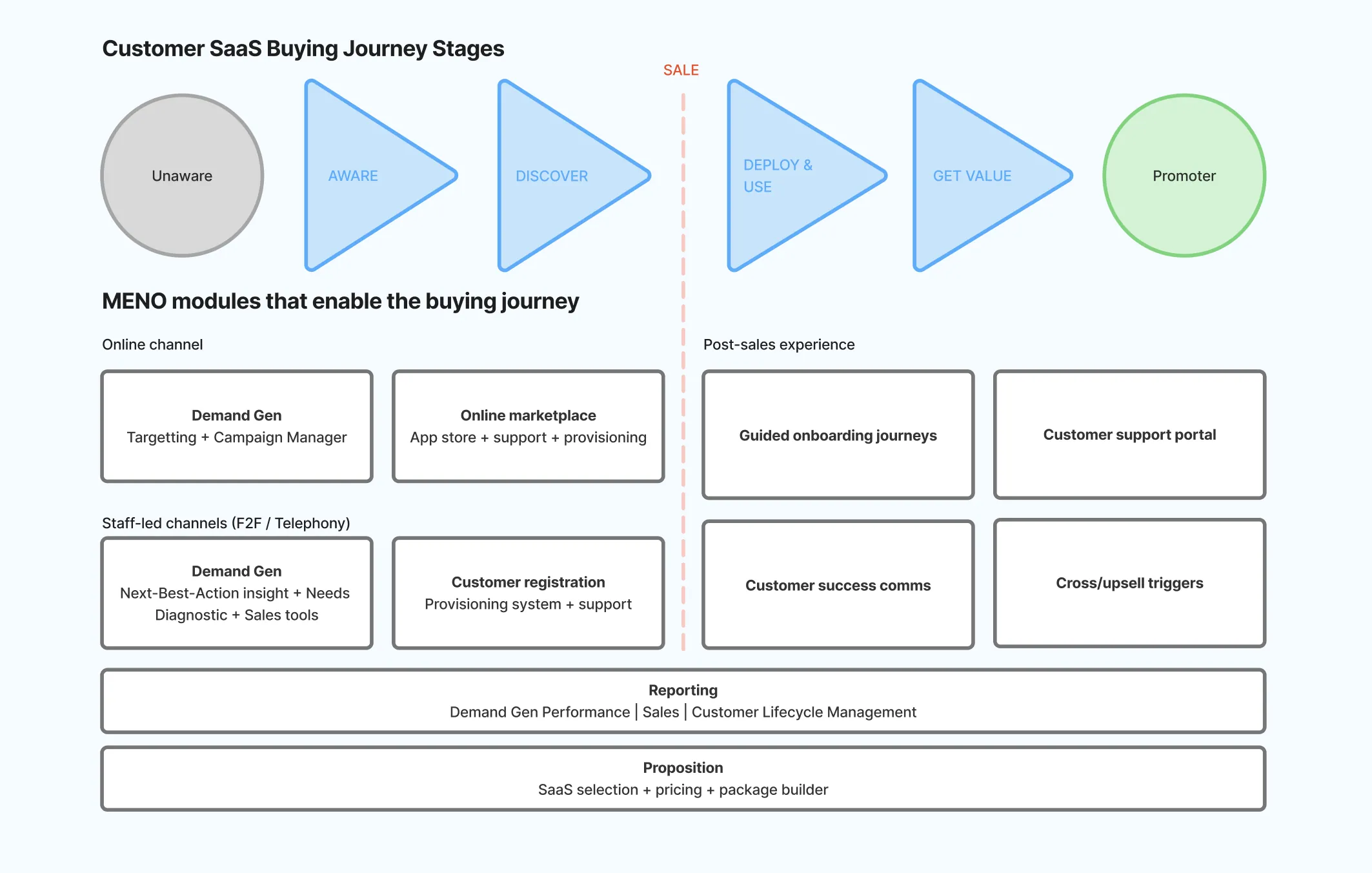
Category creation demanded more than incremental improvement, the product had to be fundamentally different in what it does and how it’s used. Working with Product, we rebuilt around adoption: investing in lifecycle communications tools, environment-specific sales enablement packages, and data interfaces that surfaced targeting insight at the point of sale.

Establish the category, don't just win the category

The opportunity was clear: move deliberately away from being just an “app marketplace”, a category being defined by shelf-ware and low activation rates and establish a new frame that competitors couldn’t occupy without a track record.

1

Reframing the category through sales

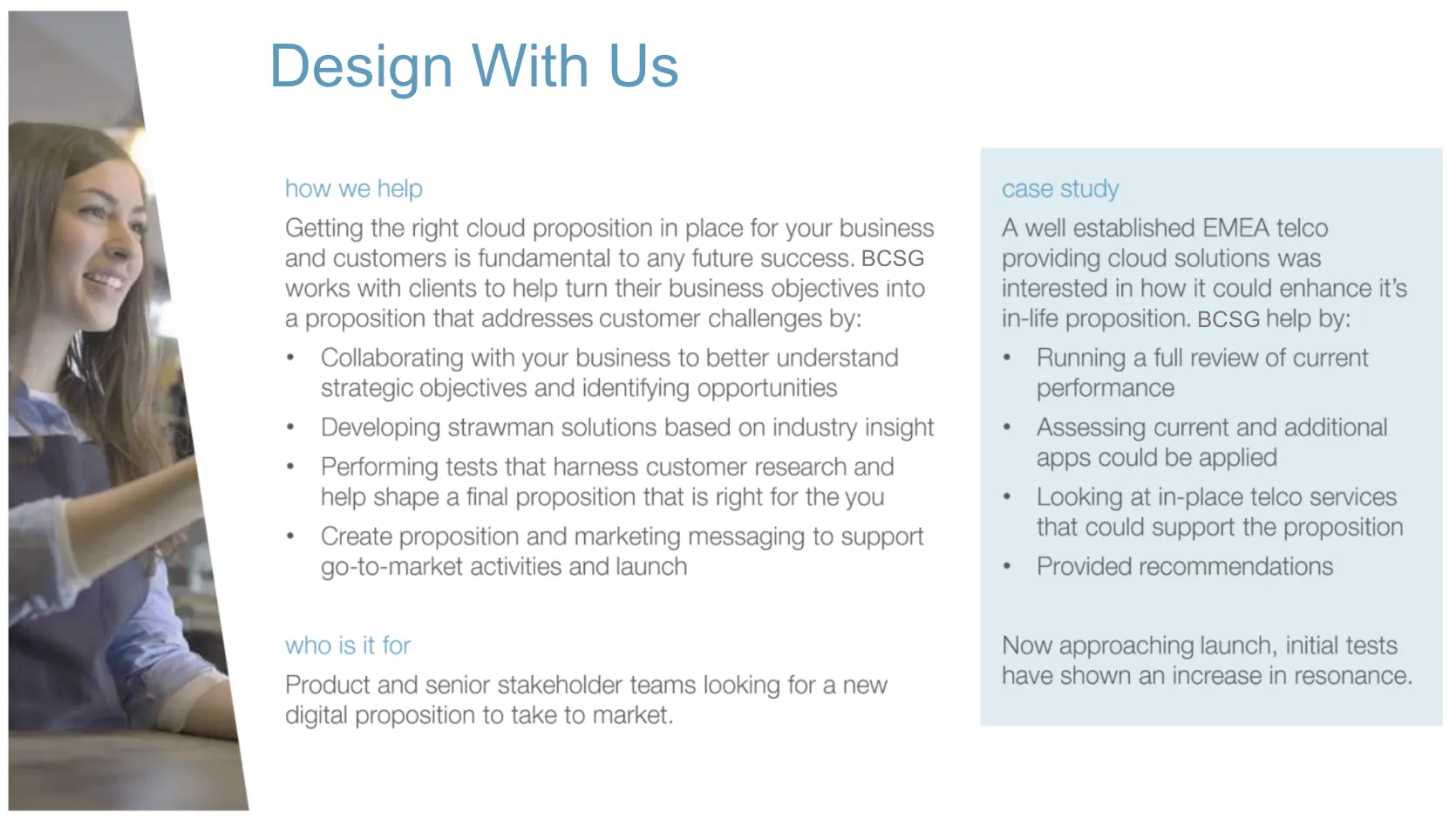
Ensuring the category landed consistently in every sales conversation required more than good messaging. We codified internal expertise into a structured engagement framework, conversation guides, battle cards and discussion guides. Wrapping this into “Design with us”: a consultative sales programme that walked prospects through configuration, pricing and GTM planning using proven success models made the differentiation clear.

2

Communicating the category through Demand Gen

Sustaining the category through content and community, a structured programme of research, thought leadership and partner events kept BCSG front of mind across buying cycles that could span twelve months or more. See the full content marketing case study for how this was built and what it delivered.

3

Refining the position as the market matured

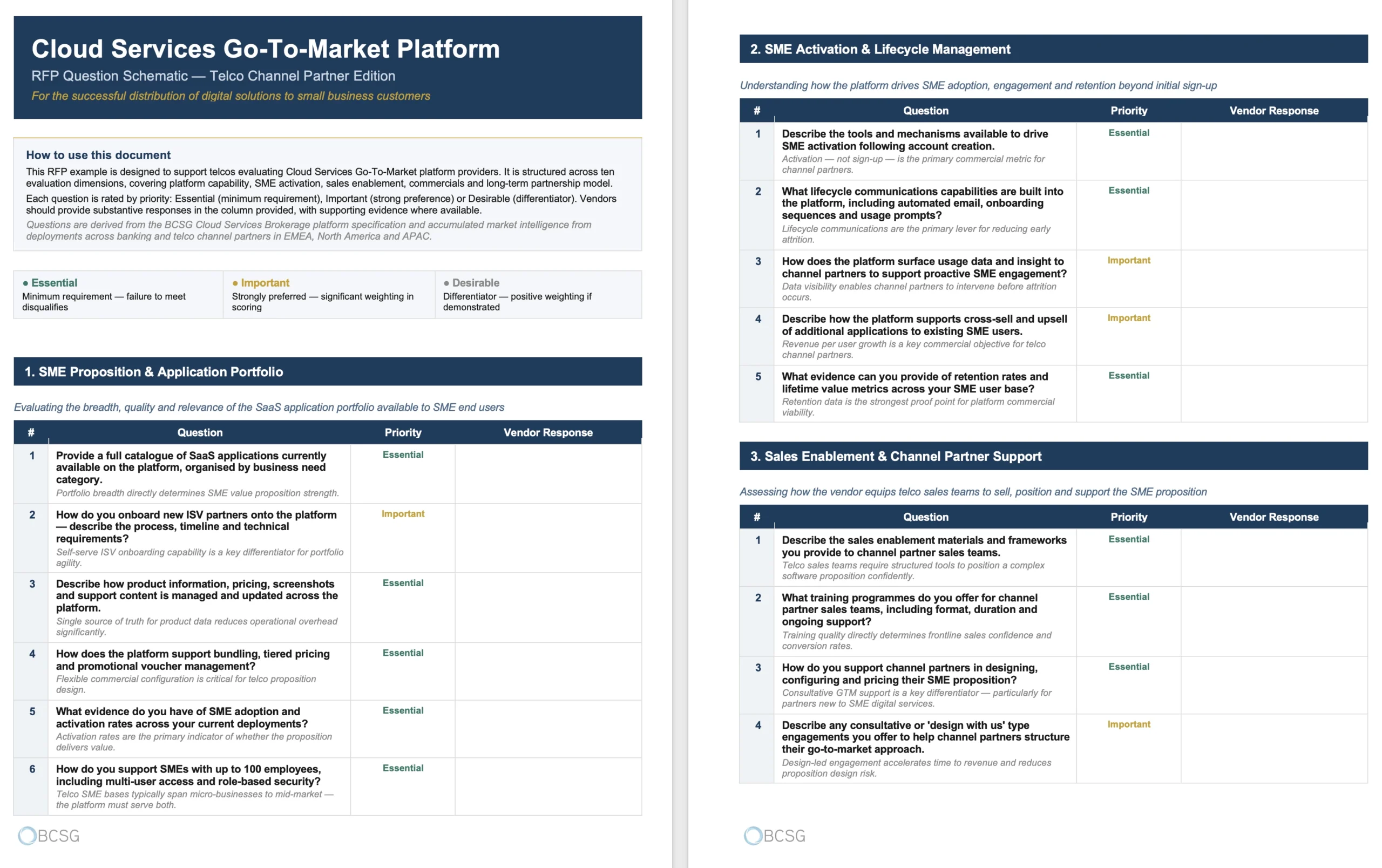
Monthly win-loss reviews, joining sales meets, competitor monitoring, analyst briefings, and direct observation at trade shows created a continuous insight loop. We would pick up on the questions asked, the objections raised, where our competitors were heading. This allowed us to the first to identify how our the market was maturing, for example prospects started to move beyond purely concerns distribution and started hitting other challenges like activation. Responding by expanding our narrative to address the full adoption lifecycle directly contributed to a 3x improvement in RFP win rates.

In conclusion

The transition from app marketplace to GTM platform wasn’t a messaging exercise — it required the product, the sales motion and the market narrative to move together. Getting there meant going hard after the root of buyer anxiety: not just what banks and telcos needed, but what they’d already tried and why it had failed. That gap shaped everything — the category, the product investments, the enablement framework and the content programme. Focus brought clarity and consistency created the category.

Get in contact

Whether you need focused help on a specific challenge or ongoing support, I'd love to hear what you're working on, to see if I can help.